
This & That
The Abolition of Slavery in Missouri
By Gould Hagler · Originally published September-October 2026 · pp. 54–57
Before the Civil War, 15 of the nation’s states were slave states. Seven seceded between December 1860 and March 1861, leaving eight slaves states in the Union. After Fort Sumter four more slave states seceded, leaving four—Delaware, Kentucky, Maryland and Missouri—loyal to the Union.1 A new slave state, West Virginia, was admitted to the Union in 1863. As the Civil War drew to a conclusion, there were, therefore, five slave states in the Union and 11 out.
The details were yet to be worked out, of course, but it was clear that the institution of slavery would soon be a thing of the past. Several issues ago, I looked into one loyal slave state—Maryland—that took matters into its own hands and abolished slavery on its own, effective on Nov. 1, 1864. Missouri took a similar course. In this column, I will recount some of the details.
There was slavery in Missouri before Missouri was a state or even a possession of the United States. At the time of the Louisiana Purchase, the slave population of the area that later became the state of Missouri was between 2,000 and 3,000. By 1810, there were 17,227 whites and 3,011 slaves in the area. Settlement grew at a rapid pace. Missouri was admitted to the Union in 1821. By 1860, the white population numbered 1,063,489; the slave population stood at 114,931.2
Most slaves performed general farm labor, though many did other types of work. There were few large slaveholders, the exceptions being in the areas of the state where hemp was grown. Slave labor was employed mostly in the northern part of the state, especially along the Missouri River and along the Mississippi north of St. Louis. In summary, Missouri “was a region of small farms, small slave holdings, and relatively few slaves.”3
During the territorial period and in the first decades after statehood, most population growth in Missouri was due to immigration from slave states, with many newcomers bringing slaves with them. Even in these early years, there was some sentiment for restrictions on the importation of slaves into the state, and even for gradual emancipation. However, these weak efforts were backed by few individuals and garnered no support from organized political parties. After mid-century, with more immigration from the North and from Germany, anti-slavery sentiment grew. The debate grew more heated during the turbulent 1850s. Still, in 1860, the legal apparatus under which the slave system operated in Missouri was untouched. As the secession crisis grew, the dominant sentiment in Missouri could be described briefly: pro-Union; pro-slavery.
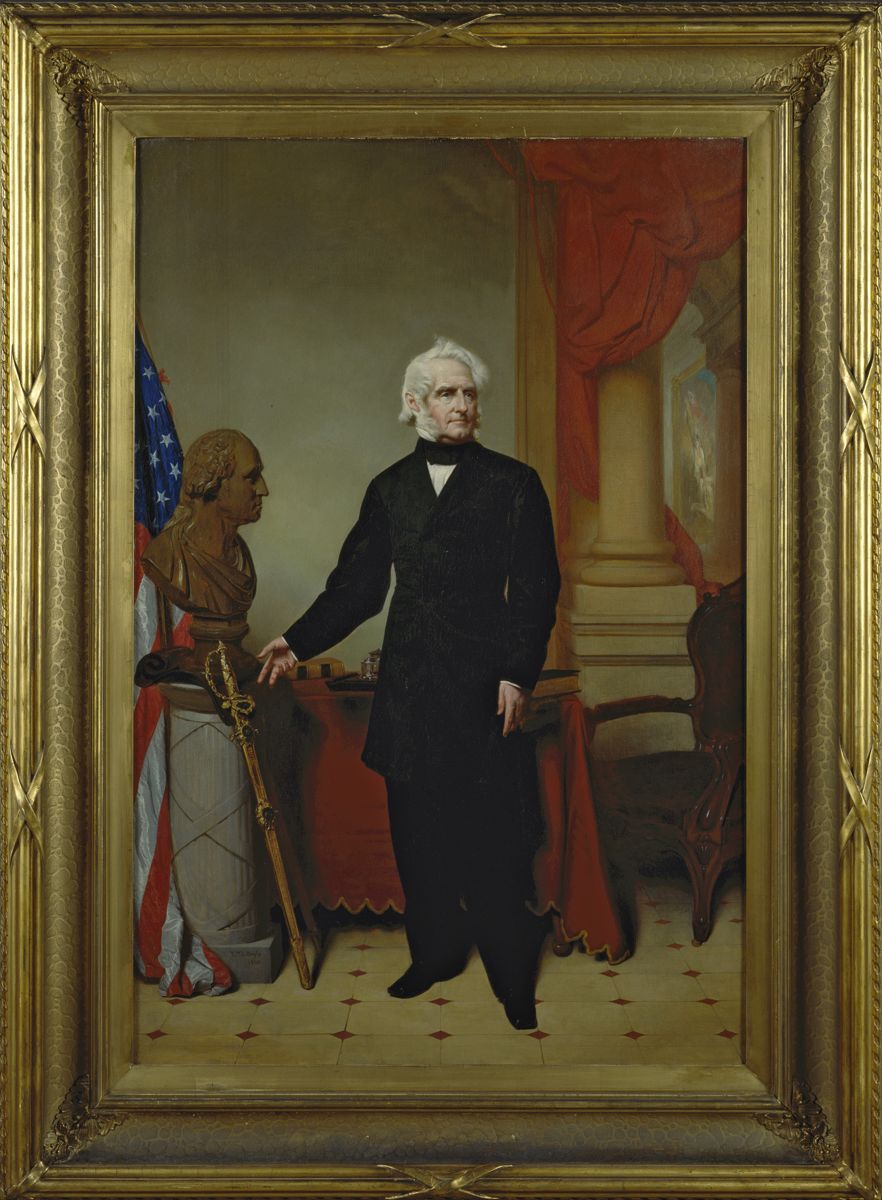
In June 1861, after Governor Claiborne F. Jackson and his pro-Confederate government were driven into exile, never to return, Missouri was left without a government. There was no established, constitutional method to move forward. A way had to be found. The 1861 Convention was called back into session and took the reins. It created a Provisional Government, with Hamilton R. Gamble as provisional governor. This ad hoc arrangement lasted through most of the war, with this Convention holding much power and playing a major role in the coming debate over slavery.
The first step toward emancipation was undertaken not by Missouri’s Provisional Government, but by an army brigadier general, John C. Frémont, commander of the Department of the West. In August 1861, Frémont issued an order placing the state under martial law and declaring that all property of those taking up arms against the United States—real property, personal property, and slaves—would be confiscated.4 Lincoln quickly undid most of what the radical general had done. This was too much, too soon, but the door had been opened.
Ten months later, in June 1862, the 1861 Convention5 reassembled. A resolution was proposed providing for gradual and compensated emancipation beginning in 1865. The measure was tabled by a vote of 52 to 19. Like the Frémont proclamation, this proposal was premature, but the votes against tabling the resolution indicate a changing sentiment.
Also indicative is a second resolution that failed. This resolution would have declared that “the people in choosing the Convention, never imagined that body would undertake any social revolution wholly unconnected with the relations between the State and the General Government.” The proposal was rejected by a vote of 35-30.6 It is probably true that the failed resolution was an accurate reflection of the voters’ sentiments when they chose the delegates. The Convention was, after all, called to address the issue of secession, not to consider emancipation and not to create a provisional government. A year of war had changed expectations.
Having postponed the 1861 election, the Convention resolved that elections would proceed for the General Assembly and for Congress in 1862; however, the Provisional Government would be extended for two more years, leaving Gov. Gamble’s administration in place. In early 1863 the newly-elected General Assembly passed a resolution requesting an appropriation of $25,000,000 from Congress to “carry emancipation into effect.” As the Constitution of 1820 forbade the liberation of slaves without compensation, the legislators took no further action on slavery.7
Most of Missouri’s political class recognized that slavery would not survive the war. The “Charcoals” favored “some sort of speedy emancipation.” The “Claybanks” hoped that the process “would take place gradually [with] a plan of compensation.” Only a few die-hards, the “Snowflakes,” hung onto the unrealistic hope that slavery would survive the war.8
When the 1861 Convention was called back into session in the summer of 1863, the stage was set for a showdown between the Charcoals and the Claybanks.
The Claybanks dominated the session under the leadership of Hamilton Gamble. The outcome was an ordinance providing for emancipation on July 4, 1870, with “varying periods of apprenticeships of the slaves under their former owners [following] their liberation.” The ordinance was passed by a vote of 55-30.9
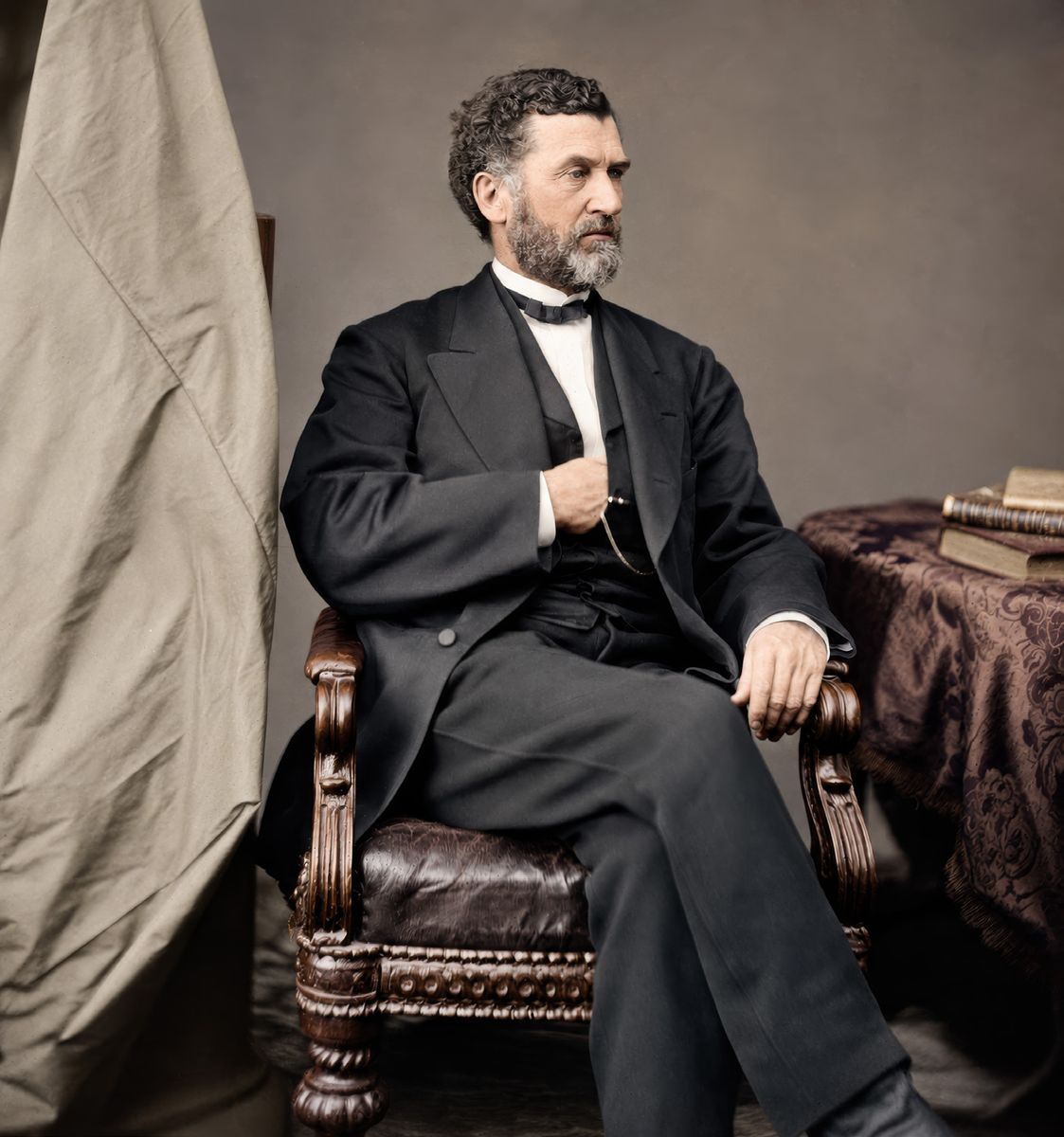
The Charcoals were outvoted, but they went away mad. Those who favored faster and more fundamental change organized the Radical Union Party and worked feverishly to achieve their objective. In a test of strength, the Radicals contested the 1863 election for seats on the Supreme Court. Their candidates did not succeed, but their showing indicated the Radicals’ growing strength. In the 1864 elections for Governor and the General Assembly, the Radicals prevailed. The new General Assembly called a popular election for a new convention to convene in 1865. Again, the Radicals triumphed and achieved an overwhelming majority in the 1865 Convention.10 When the end came, it came quickly. The 1865 Convention, dominated by the Radical Charles D. Drake, assembled on January 6. Three days later, an ordinance was introduced to abolish slavery. On January 11, the ordinance was passed by a vote of 60-4. The new governor, Thomas C. Fletcher, signed the ordinance the same day. Slavery was abolished entirely, with no delay, no compensation, and no vote by the people.11 In his history of slavery in Missouri, Harrison Trexler wrote that Missouri “has always been proud of its voluntary action in freeing the remnant of its black population.”12 A source of pride, yes, but what practical effect did the ordinance have? The Thirteenth Amendment took effect in December 1865, so if Missouri had done nothing at all, slavery would have been abolished within the year. In any event, most slaves were already free, by one means or another. Many freed themselves by entering U.S. military outposts. The 8,000-plus black men who served in the Union army would certainly never be returned to bondage. Many others—some freeing themselves and some taken from their disloyal owners—were employed by the army as laborers. Historian William Parrish wrote that a serious shortage of farm labor was partly due to “a massive flight of slaves in 1863 and 1864.”13 By the time the law caught up, slavery in Missouri was already dead. War is a tremendously powerful agent of change— technological, economic, political and social change. This effect was glaringly evident in the abolition of slavery. The institution in 1860 was not significantly different than what it had been 30 or 40 years earlier. In 1865, it was abolished throughout the nation—immediately, unconditionally, and without compensation. The debate over abolition in Missouri and the similar debate in Maryland inform us of what might have been, providing clues about how abolition could have occurred without the catalyst of war. Sources: William E. Parrish, Missouri Under Radical Rule, 1865-1870, 1965 and A History of Missouri, Volume III, 1860 to 1875, 1973; Harrison Anthony Trexler, Slavery in Missouri, 1804–1865, 1914; Official Records of the War of the Rebellion.
Endnotes
- Confederate flags had 13 stars, two of which represented Missouri and Kentucky. Pro-secession elements in these states declared for the Confederacy and the states were represented in the Confederate Congress. 2. Trexler, pp. 9-10. 3. Trexler, p. 53. 4. The exact wording of the proclamation, as it pertains to emancipation, is: “Real and personal property of those who shall take up arms against the United States, or who shall be directly proven to have taken an active part with their enemies in the field, is declared confiscated to public use, and their slaves, if any they have, are hereby declared freemen.” The order also provided that men “taken with arms in their hands within [Union] lines shall be tried by court-martial, and if found guilty will be shot.” O.R., ser. 1, v. 3, p. 466; Trexler p. 232; Parrish 1973, pp. 87-89. 5. I will continue to call this body the 1861 Convention even when it reconvened in later years. The 1865 Convention was called in a later election and was not a reassembly of the 1861 Convention. 6. Trexler, pp. 233-4. 7. Trexler, p. 235. 8. Parrish 1965, pp. 3-6. 9. Parrish 1965, p. 4; Trexler, p. 236. 10. Parrish 1973, pp.101 ff. 11. Trexler, pp. 239-40. 12. Trexler, p. 240. 13. Parrish 1973, p. 80.
Gould Hagler is a retired lobbyist living in Dunwoody, Ga. He has been a regular contributor to CWN since 2016. He can be reached at [email protected].