
Central Virginia Battlefields Trust
A Man Could Have Got Almost Anything He Wanted: Soldier Pickups on Central Virginia’s Battlefields – Part II
By Tim Talbott · Originally published September-October 2026 · pp. 62–66
Jedediah Hotchkiss, Gen. Thomas J. “Stonewall” Jackson’s staff cartographer, recorded in his diary the discovery of the body of fellow staff officer and tentmate Capt. James Keith Boswell, who was killed when Jackson was mortally wounded on May 2, 1863, at Chancellorsville. Hotchkiss jotted that Boswell’s “body had been riffled of hat, glass, pistol, daguerreotype, & c.” On May 19, Hotchkiss wrote to his wife, providing more particulars about finding his friend: “I did not get back to look for Boswell until noon the next day, in fact the enemy had possession of the place where he was killed until about the time—I found him looking perfectly natural, a smile on his face—I have no doubt he was instantly killed, for two bullets went through his memorandum book in his side pocket & then through his heart. I got an ambulance and took his body to a nice family grave-yard, Mr. [Beverly Tucker] Lacy’s brother’s [Ellwood] and there had a grave dug & wrapped his over coat closely around him, putting the cape over his head & buried him thus, in all the martial dress, lowering him to his resting place in a shelter tent I picked up on the field of battle, and then spreading it over him—Mr. Lacy made a noble prayer & we finished our sad duty… .” Within these two brief accounts, Hotchkiss included three references to battlefield pickups. He noted that someone removed several of Boswell’s personal items from his body; he explained that he used a shelter tent that he “picked up on the field of battle” to ease Boswell into his grave; and, although he did not specifically mention it at the time, Hotchkiss apparently kept Boswell’s bullet-pierced memorandum book as a keepsake. Today, it resides in the American Civil War Museum in Richmond. This article continues our look at items that Civil War soldiers picked up on the battlefields of central Virginia and their motivations for doing so. In particular, this essay examines soldier battlefield acquisitions as relics and keepsakes, organized army or government efforts to collect weapons and equipment for future use, and Fredericksburg as a location where soldiers obtained items for personal benefit, comfort, or shipment home.
Relics and Keepsakes
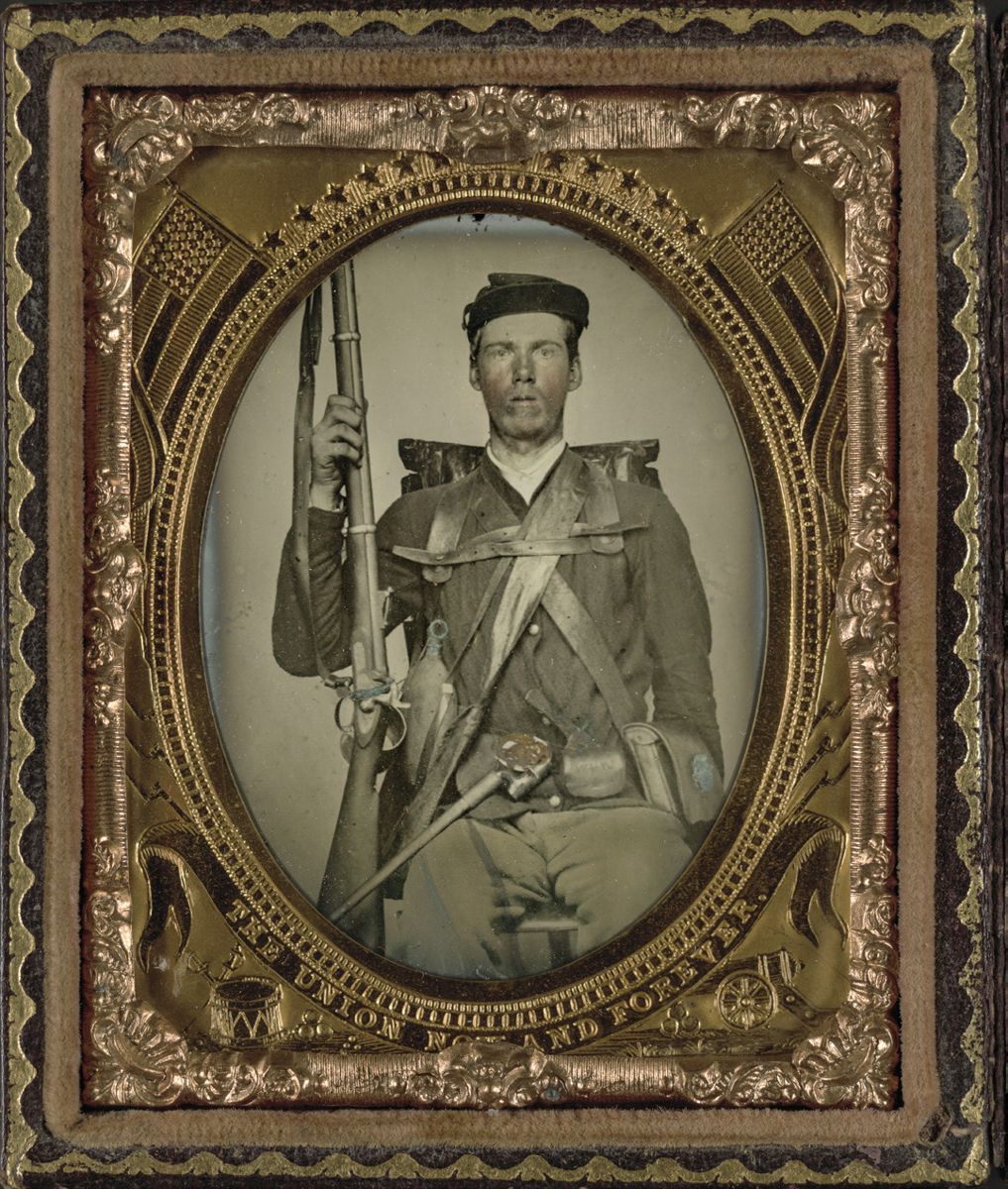
Some of the things picked up on central Virginia’s battlefields met immediate needs; others held sentimental value and served as souvenirs and keepsakes. Lt. Horatio David, 16th Georgia Infantry, sent home the hat of his brother, Capt. Simeon David, who served in the 14th Georgia Infantry and was killed in the Battle of the Wilderness, to Simeon’s wife, Fanny. One of Simeon’s comrades picked it up and gave it to Horatio. Likewise, Shepherd G. Pryor, 12th Georgia Infantry, wrote to his wife, Penelope, soon after Fredericksburg, sending items to remember him by and to hold for his own keepsakes. Pryor wrote, “I send you also a little gun, a Burnside Rifle, which is for my boys to remember me by if I never should go home, [and] a little axe that I got from the yanks at Fredericksburg. It is for Robert S. [son] dont let him have it untwill he gets large enough to keep from cutting off his fingers. I may send some clothes by Henry [an enslaved camp servant], my old uniform coat. You will please get the greese out of it and keep it to remember me [by] as the first military coat that I ever had. I will rop [rope or wrap] the gund in a small shoulder blanket that you will also keep.” The emotional importance of these tangible items to the soldiers comes through in accounts like Pryor’s. Most soldiers seemed to fully realize that they were living in important times. They wanted to keep things that tied them to the events they were experiencing. They also sent items home that they hoped would remind their loved ones of them and their sacrifices. Some of these things may seem trivial, but soldiers probably would not have taken the time and effort to send or keep them if they were not personally significant. For example, Pvt. George Fowle, 39th Massachusetts Infantry, wrote to his wife, Mary, while “On the Battle field [Spotsylvania]” on May 13, 1864. He penned, “I will send you an envelope that was taken out of a Johney’s cartridge box.”
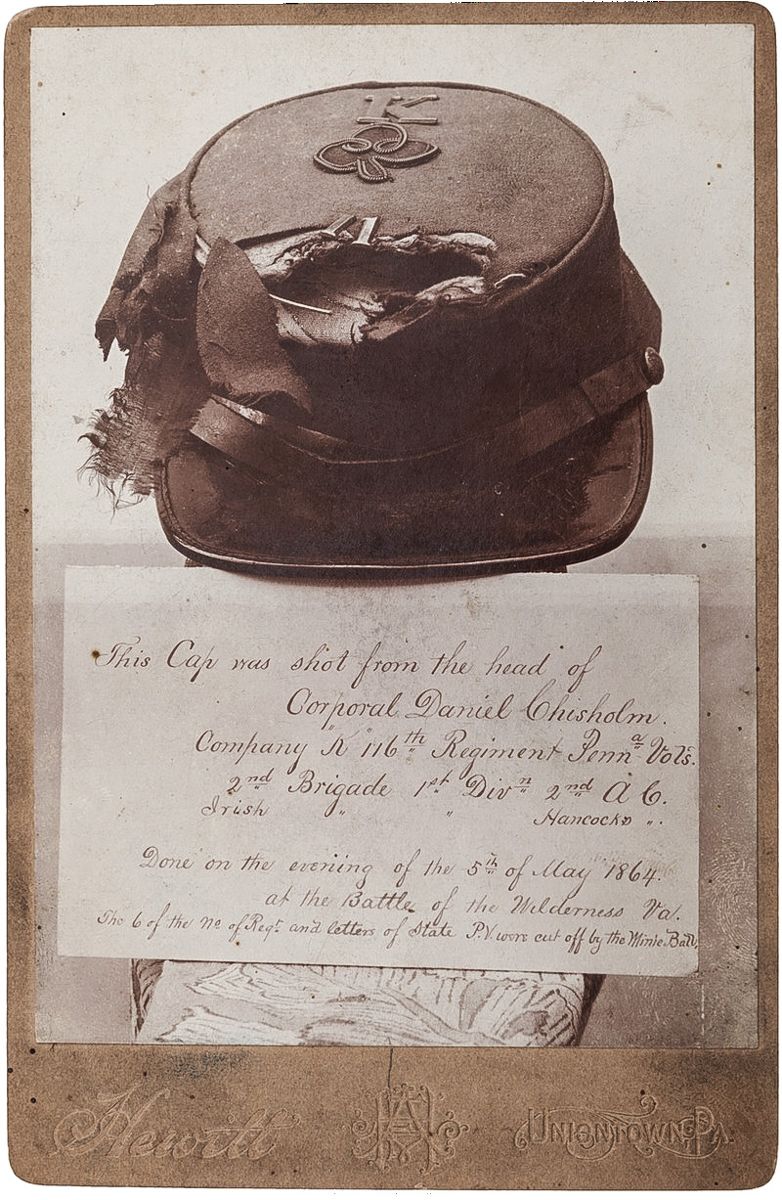
Lt. Henry Ropes, who served in the 20th Massachusetts Infantry, wrote from Falmouth on December 19, 1862, to his older brother, John, and related that “I have no time to write much, am writing a long letter to you. I send by him [white camp servant James] several books, your pipe and a cup, taken from Fredericksburg, which please give to Mary Ann from me.” In the long letter version to John the following day, Henry mentioned the cup for Mary Ann again but also included, “Also a little drawing of 2 sirens. Please give it to Louisa. It is of no particular value but as a relic.” With items that had a personal or comrade connection, it is easier to see why a soldier would want to keep them. For instance, the 64th New York Infantry’s Pvt. Warren B. Persons wrote home to his mother after Chancellorsville on May 11, 1863: “The ball which hit me I have sent home by Henry Merrill of the 23rd whose time is out. He will give it to you. It came through the dirt which I had thrown up in front of me and hit me squarely in the chest just below the collar bone and a little to the left of the chest bone. It struck with sufficient force to stagger me, but did no injury, thanks to my breastwork which I threw up the night before.” Similarly, about two weeks after the Battle of the Wilderness, 19-year-old Corp. Daniel Chisholm, 116th Pennsylvania Infantry, wrote a letter to his father giving some details about his first experience in battle. In doing so, Chisholm related a close call: “I had the front part of my Cap shot off by a Minie Ball, It knocked it off my head and made me feel a little strange about the top knot.” Thinking it might make a good souvenir, he noted, “I would like to send my Cap home if I could get the chance.” Apparently, Chisholm did indeed either keep or send his forage cap home, as it later appeared in a cabinet-card photograph with a descriptive label attached. The Battle of Fredericksburg proved to be fruitful ground for relic-gathering soldiers. Lt. Ujanirtus Allen of the 21st Georgia Infantry, Hoke’s Brigade, shared a couple of examples in his letters home. Allen and his regiment battled along the Richmond, Fredericksburg, and Potomac Railroad near Hamilton’s Crossing. A few days later, he wrote home to his wife, Susan, describing the battle. In a follow-up letter, only part of which survives, Allen related the battle’s aftermath and explained that he happened upon the body of Federal Brig. Gen. Charles F. Jackson. Allen also explained that he encountered one of Gen. Jackson’s staff officers, who “was probably mortally wounded in the railroad.” Allen wrote that “I paid him [staff officer] much attention. He gave me two of the finest blankets that I ever saw if I would go upon the field after them …I spent much time that night in doing what I could in assisting their wounded, for which I received their thanks and blessings.” Lieutenant Allen also wrote honestly that “I can shoot them as deliberately and eagerly as ever I did any game; but I can not pass a wounded man without doing what I can for him, if it is nothing more than a sympathising word or look. Is not thare a line, ‘Lord that mercy I to others show, that mercy show to me.’” Allen also described some of the battlefield items he collected. “I captured a Sharp’s rifle, spring triggers, shoots a thousand yards. I also got some rations among them a nice quantity of coffee. This was given to me by a wounded man who I gave water… . Many of our men robbed the dead while at the railroad that night. I did not do this but assisted the wounded. However I robed a dead horse of a very fine bridle,” Allen explained. In a December 19 letter, Allen again mentioned the bridle: “It was (Federal) Brig. Gen. Jackson’s bridle that I got. I could have got his saddle also but did not know that I could have taken care of it. I took his blankets and put them under a wounded Yankee. I have his ruber legins. If I had known these things were his I would have kept them as trophies. If I can take care of it I intend that my ‘little girl’ [wife] shall have his bridle. I know she will prize it very high because I fought for it.” Soldiers often viewed battlefield pickups as legitimately captured property because they had risked their lives.
Gleaning the Battlefield for the Cause
As detailed in this article’s first part, arms and equipment seemed scattered everywhere following battles. Scenes like the aftermath of Chancellorsville, described by “Dixie,” a special correspondent to the Atlanta Southern Confederacy newspaper, were common. “Never upon any battlefield have I seen so many muskets thrown down,” Dixie penned. Also writing after Chancellorsville, the 33rd Virginia’s Lt. George D. Buswell wrote to his brother on May 8, 1863, that “We captured … 15 or 20 pieces of artillery a great many small arms, knapsacks, canteens, blankets, gum clothes, &c.” Pvt. Berry Kinney, 14th North Carolina Infantry, wrote on May 14, 1863, that “I am in better hopes of the army being support[ed] than I was[,] for it they have another such a fights as they had [at Chancellorsville] it will not take much to support the army.”
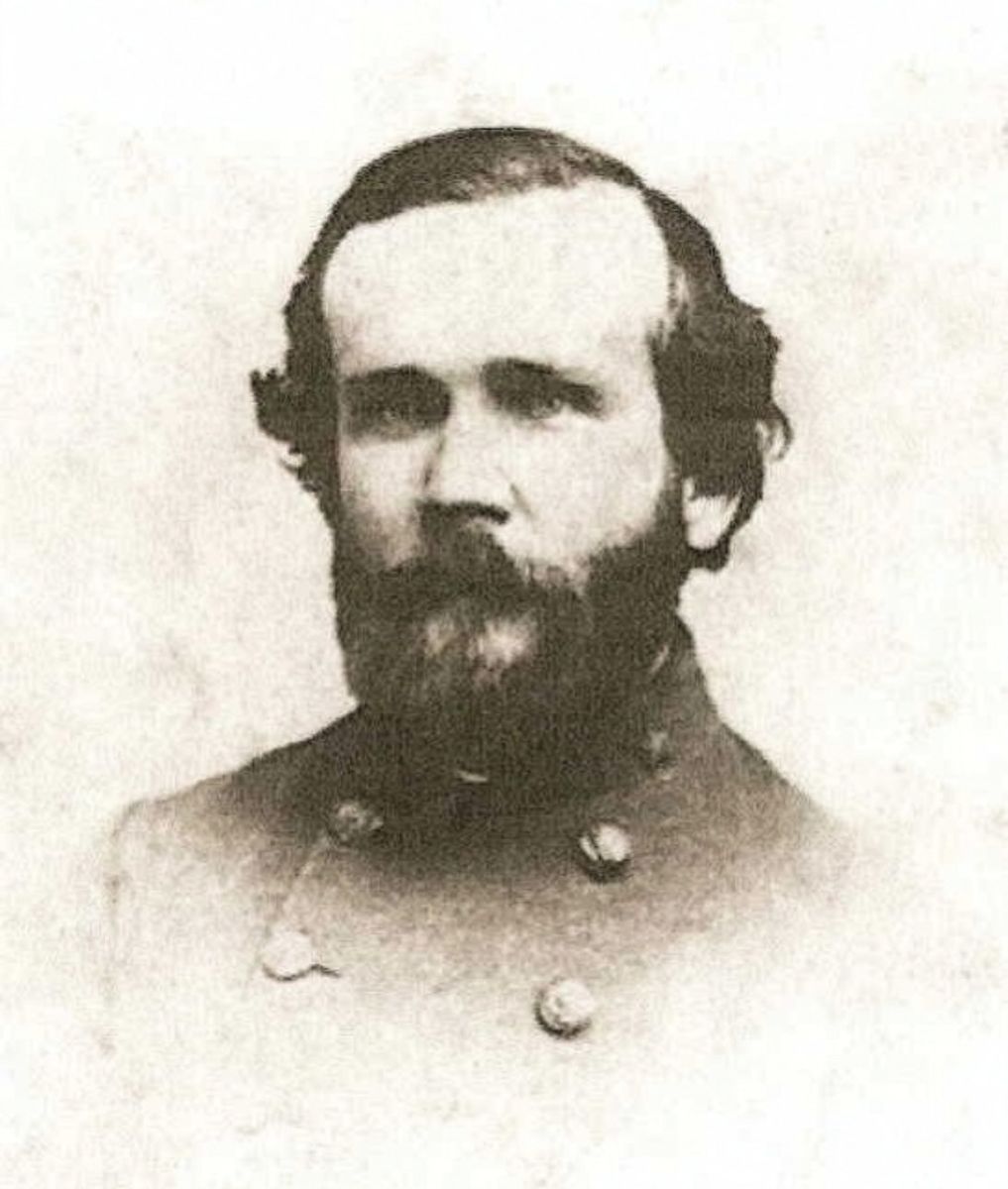
Naturally, the opportunity to acquire needed items improved when a soldier’s side held the battlefield after the fight. That also proved true for gathering arms and equipment that the army at large might put to future use. Reports from Lt. Col. Briscoe G. Baldwin, chief of ordnance for the Army of Northern Virginia, document the number of firearms and pieces of equipment collected from the battlefields of Fredericksburg and Chancellorsville. Many of these weapons were sent to facilities in Richmond, Lynchburg, Danville, and Staunton, where they were cleaned, repaired, and eventually reissued to soldiers. Josiah Gorgas, chief of ordnance for the Confederate States, estimated that by July 1, 1863, the Confederacy had 150,000 “arms received from the battlefields and put in good order” for its use. For Fredericksburg, Baldwin enumerated several different types of small arms gathered up: Springfield rifles and muskets, Belgian rifles and muskets, Austrian rifles, improved and altered muskets, Mississippi rifles, and Enfield rifles, for a total of 11,091 shoulder arms. In addition, they collected 255,000 rounds of ammunition in .54, .57, .58, and .69 caliber. They also gathered 1,800 sets of infantry accoutrements: cartridge box, cap pouch, waist belt, bayonet and scabbard. The haul from Chancellorsville proved even more impressive. Baldwin noted that 29,500 muskets and rifles were collected. He admitted that about 10,000 of those were “dropped by our men, leaving 19,500 captured.” The inventory also included 8,000 cartridge boxes, 4,000 cap pouches, 11,500 knapsacks, and 300,000 rounds of infantry ammunition. Brought off the battlefield, too, were 13 artillery pieces, nine caissons, three battery wagons, two forges, 1,500 rounds of artillery ammunition, and various harness, wheels, axles, and ammunition chests. Finally, Baldwin mentioned that “A large quantity of lead has been and is now being collected from the battle-fields.” Baldwin did not specify the exact source of this lead in the quoted passage.
An article in the July 25, 1864, issue of the Richmond Daily Dispatch indicates that during the early stages of the Overland Campaign, local civilians were salvaging war materials in exchange for government food. The article stated that “We noticed at the Central Depot on Saturday six [rail] cars loaded with arms, knapsacks, cartridge boxes, sabres, &c., together with a large lot of pig lead, the spoils of the battle-fields of the Wilderness and Spottsylvania. The balls are collected on the battle-field by the people living in the vicinity, brought to an established depot, and melted into pigs. In this way they are forwarded to the laboratory here. As lead is at this time in demand, it will be very acceptable. In this lot there is not less than 16,000 pounds; and about 8000 or 9000 stand of arms, which, with slight repairs, will be very serviceable. Lieut. Louis Zimmer, Assistant to Chief of Ordnance, has charge of that department. In return for lead and arms, he issues to the people corn meal and flour.”
A Town Turned Battlefield
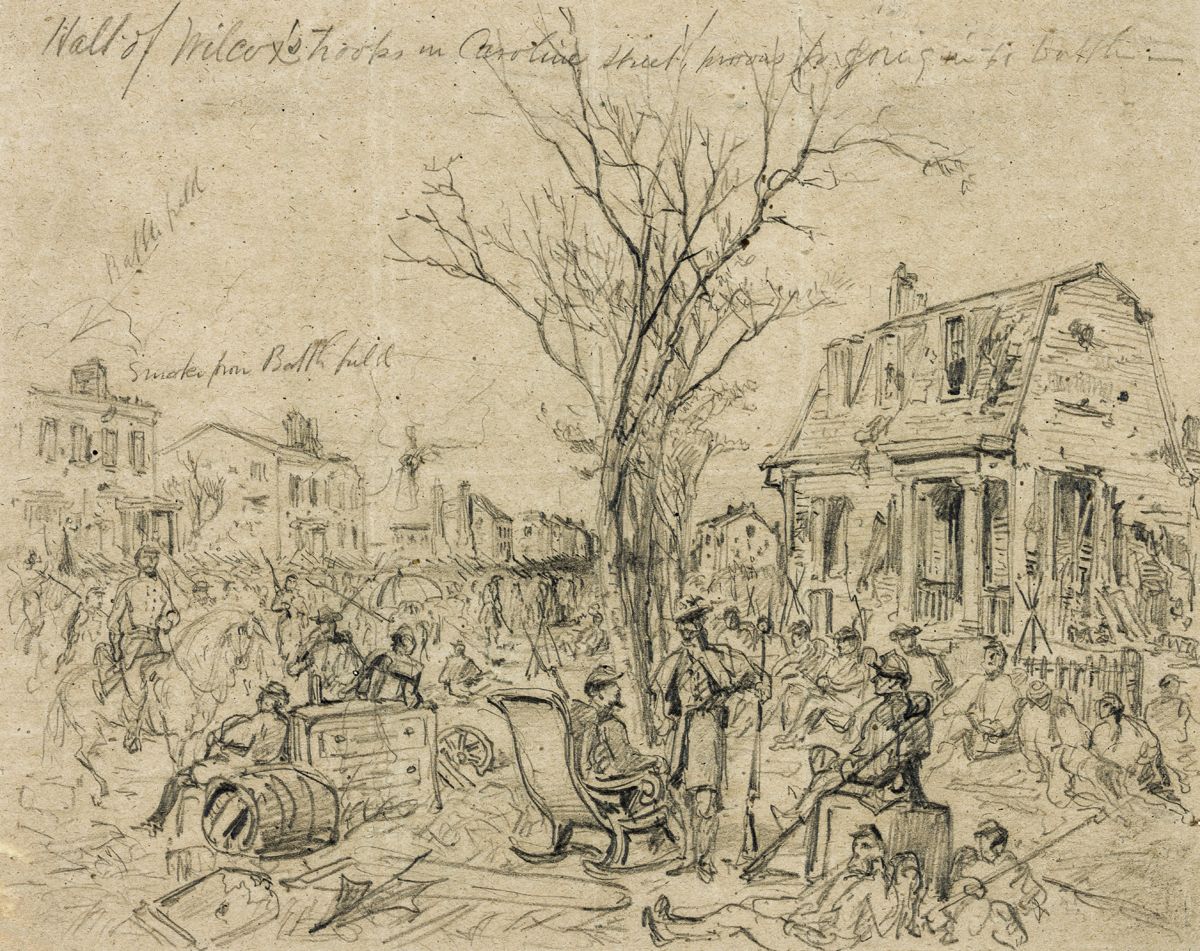
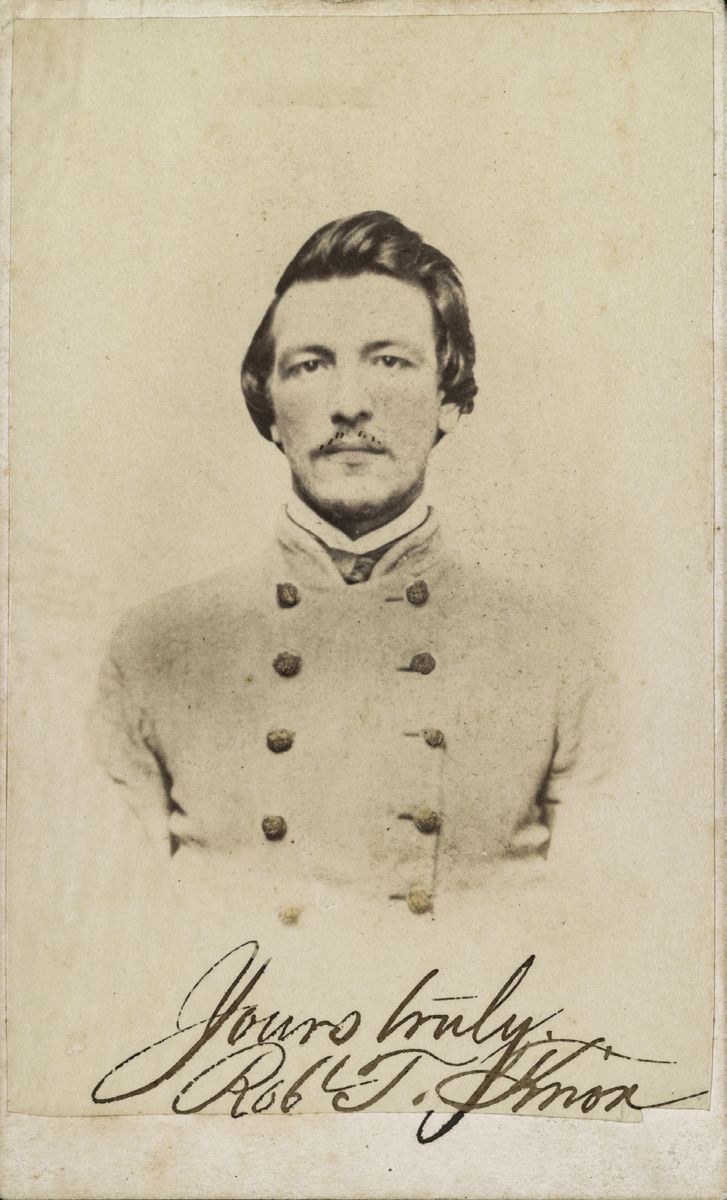
The Battle of Fredericksburg witnessed the first real street fighting of the Civil War. On December 11, 1862, Confederates under Brig. Gen. William Barksdale slowed the Federal crossings of the Rappahannock River by presenting stubborn resistance along the banks and then through the town’s streets. The determined opposition that Union soldiers faced, along with the destruction caused by infantry fighting and artillery shelling from both sides, contributed to their sense that pillaging the town was justified. In a December 14 letter, William Cross Hazelton of the 8th Illinois Cavalry wrote to his wife, Fannie, explaining that “It cost many lives to gain a passage over the river, and when our soldiers did get there, mad with the excitement of battle, they made wretched work with the property of citizens. The finest furniture is thrown into the streets, where it is used by our soldiers with as much nonchalance as though it were our usual camp furniture. Enclosed is a piece of silk, which I took from a lady’s bonnet which lay trampled in the street.” The soldiers’ hardening process, as discussed in this article’s first part, continued, as exemplified by Pvt. Roland Bowen, 15th Massachusetts, who wrote to his mother about a week after the battle: “But we stole or distroyed everything in the City, great was the ransacking thereof. Mother you know but very little about War. One Reb was killed with a canon ball [and] three days after the Hogs were eating up the body and no one would take pains to drive them away. I was too busy stealing [in] the City, besides I knew the hogs wanted something to eat. (Such is War).” The 14th U.S. Infantry’s John M. Young sent his wife a Bible that he took from Fredericksburg as a keepsake. She inscribed it in part: “These few lines I will transcribe in this holy book as a slight token of respect toward the giver who is now far from us at the well noted place called Fredericksburg who with many others gallantly entered the town under the galling fire of the enemy’s guns where he obtained this book, and brought it away with a number of other things as trophies of war.” However, for some soldiers, any portable item was fair game. One soldier made off with a statue that stood almost three feet tall from the Douglas Hamilton Gordon home on Princess Anne Street and sold it to an officer. Another soldier noticed a comrade carrying around a stuffed alligator. Pvt. Burpee provided a list of things he saw being pilfered: “the street was filled with soldiers running to and fro, loaded with boards, beds and bedding and clothes of all descriptions, crockery ware and household furniture, tobacco, bee hives, flour, sugar, and every variety of goods from apothecary, dry goods, grocery, liquor, and jewelry, stoves.” Sgt. Bowen noted that the banks were fair game, too: “Well we burst the bank. & found lots of cashed drafts, checks & some Virginia money, one of the boys found about $300.00 in gold, I only found some $6.00 in Virginia money & so.” Despite significant dangers, the looting continued. Confederates, too, noted the damage caused by Federal looting. Among them was Fredericksburg native Robert Taylor Knox, 30th Virginia Infantry. Knox visited his family’s house after the Federals evacuated the city and wrote his mother that “They left not even a blanket counterpane sheet or anything not a towel, nor soap, nor cups of saucers but a few plates & some cooking utensils.” Knox noted that “Every body houses in the same fix.”
Conclusion
As the primary source evidence offered in both parts of this article shows, Civil War soldiers had a wide range of motivations for picking things up from the battlefields on which they fought. Some soldiers had immediate needs for food, clothing, and shelter, while others used things like paper and envelopes from the enemy to help maintain communication with those at home. Some gathered castoff items to sell or trade, while others sought something to send home as a relic or a reminder of their service. Soldiers usually viewed taking things from enemy dead in practical terms. More than one fighting man expressed the hardening that came with their profession, and most believed that it was simply senseless to bury a foe if he had something of use or value. Rather, they often viewed acquiring things from the battlefields as a reward for the dangers they faced and the successes to which they had contributed. Examining these primary sources gives us a more complete picture of soldiers’ diverse wartime experiences and helps us better appreciate their perspective on the terrible sights they saw and the ordeals they endured on central Virginia’s battlefields.
Tim Talbott is the Chief Administrative Officer with the Central Virginia Battlefields Trust.
The mission of CVBT is to preserve land associated with the four major campaigns of: Fredericksburg, Chancellorsville, Mine Run, and the Overland Campaign, including the Wilderness, and Spotsylvania Court House. To learn more about this grassroots preservation non-profit, which has saved over 2,000 acres of hallowed ground, please visit: www.cvbt.org.