Blue & Gray Education Society
Bermuda Hundred Campaign Sign Project
By Robert D. Jenkins Sr. · Originally published September-October 2026 · pp. 34–35
Who We Are
Blue & Gray Education Society (“BGES”) is “dedicated to the objective study of the origins and impact of the American Civil War and related events.” This is our Mission Statement. We do this in a variety of ways: We Provide interpretive markers and other visual assets (cannons, wagons, flags, panels) at historic sites and battlefields. 1. We Educate American history through multiple platforms, including written, visual, and social media. 2. We Provide access for in-depth studies of important American events. 3. We interpret the places where important things happened in American history! It has been said that other organizations help to preserve and protect the “dirt” where important events occurred. BGES serves to interpret the “dirt” by sponsoring interpretive markers and other visual aids and artifacts for state and local sites throughout the Nation. We do this by supporting state and local parks, sites, and museums by meeting their needs for a given project. Whether through 1) professional (historian) interpretive support, 2) technical design and graphic support, and/or 3) financial support, BGES leads the way to meet the needs for each organization. We do this by identifying a site that is in need of interpretation or refurbishment, partnering with a local or state group tasked with the stewardship of that site, and providing support to tell their important story in America’s History. For over 30 years, BGES has sponsored interpretive markers and provided educational support across the country. We are currently involved in the replacement of 55 markers at Kentucky’s Perryville Battlefield State Historic Site and 13 markers at the Board of Franklin Trust’s Rippa Villa and Spring Hill sites in Tennessee. Both projects are nearing completion, and we expect the panels to be installed at both sites this summer and in time for anniversary tours and programs this fall. We are also actively engaged in exploring new projects in Georgia, Indiana, Kentucky, Mississippi, North Carolina, Ohio, Pennsylvania, and Virginia, but we need your help to support our mission.
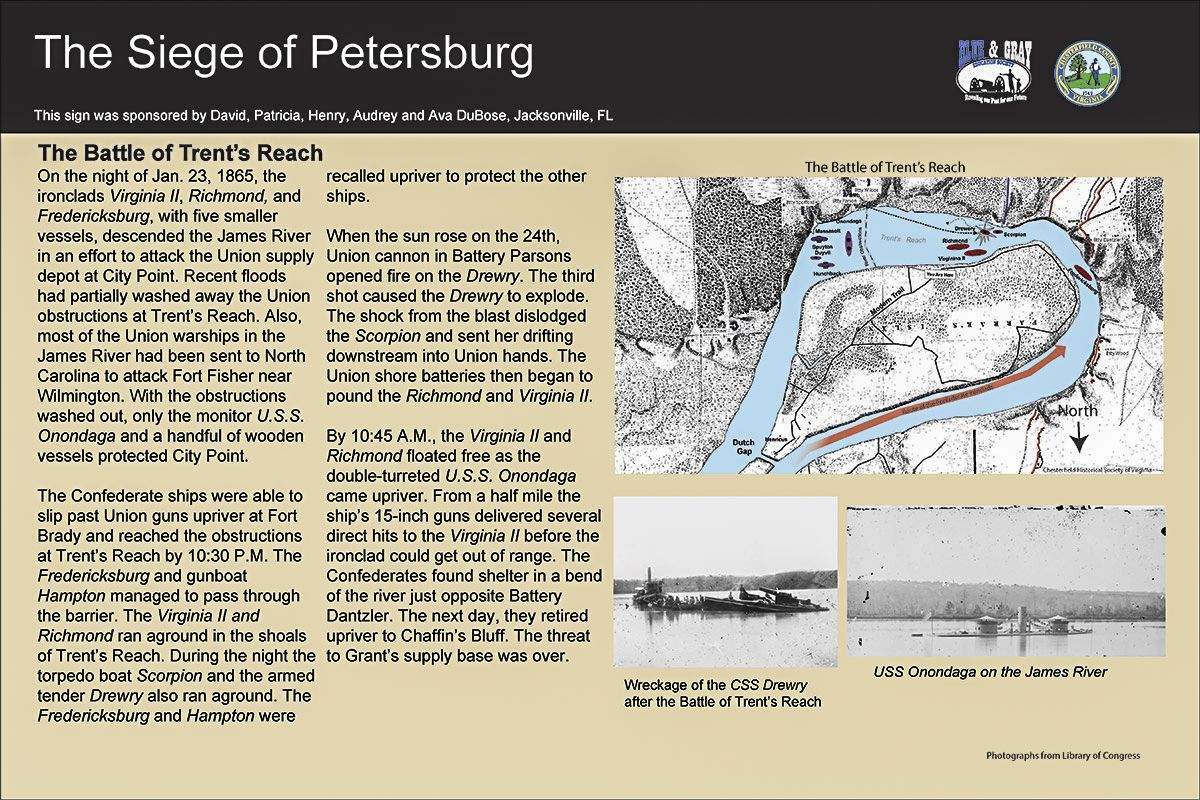
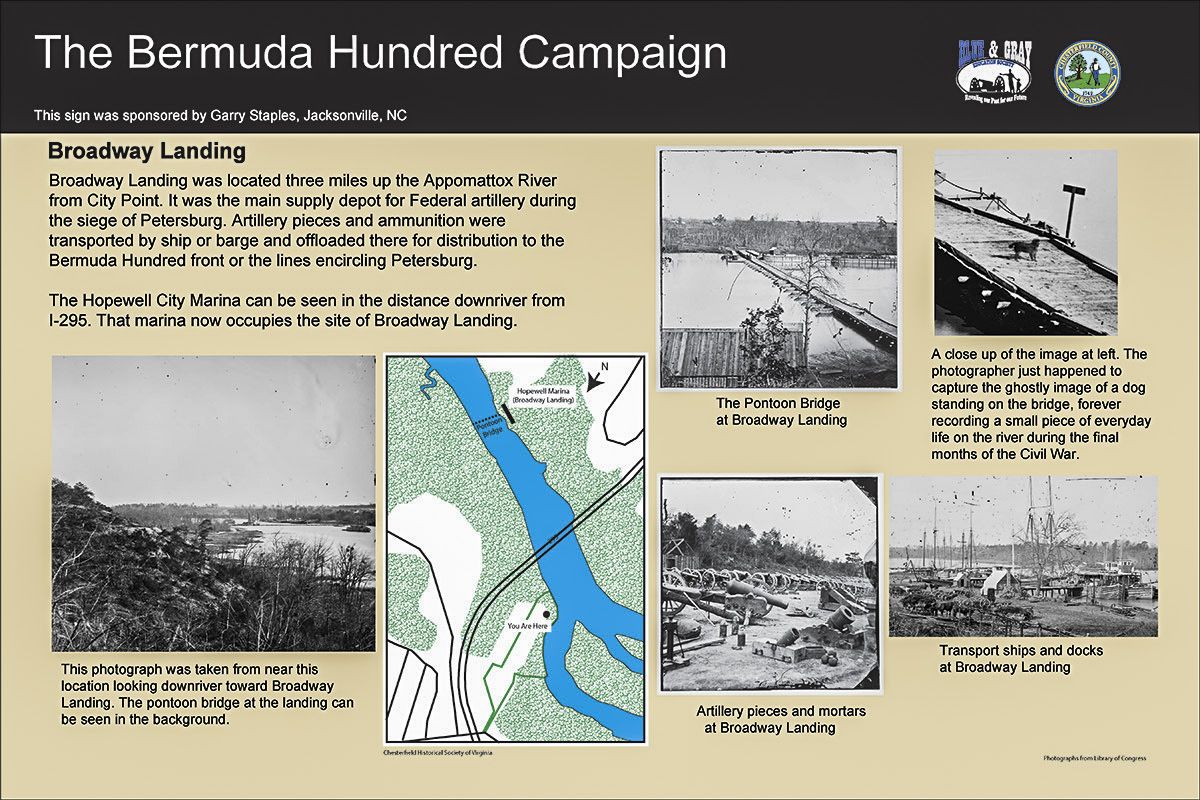
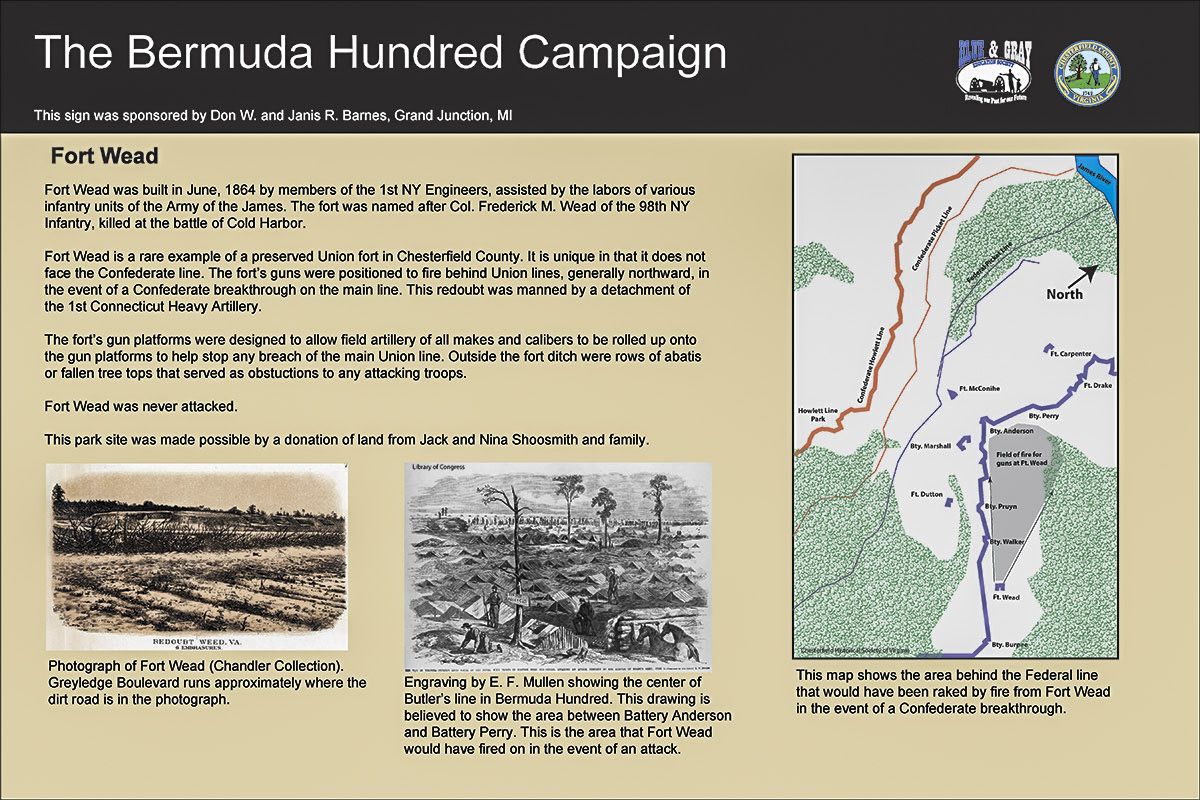
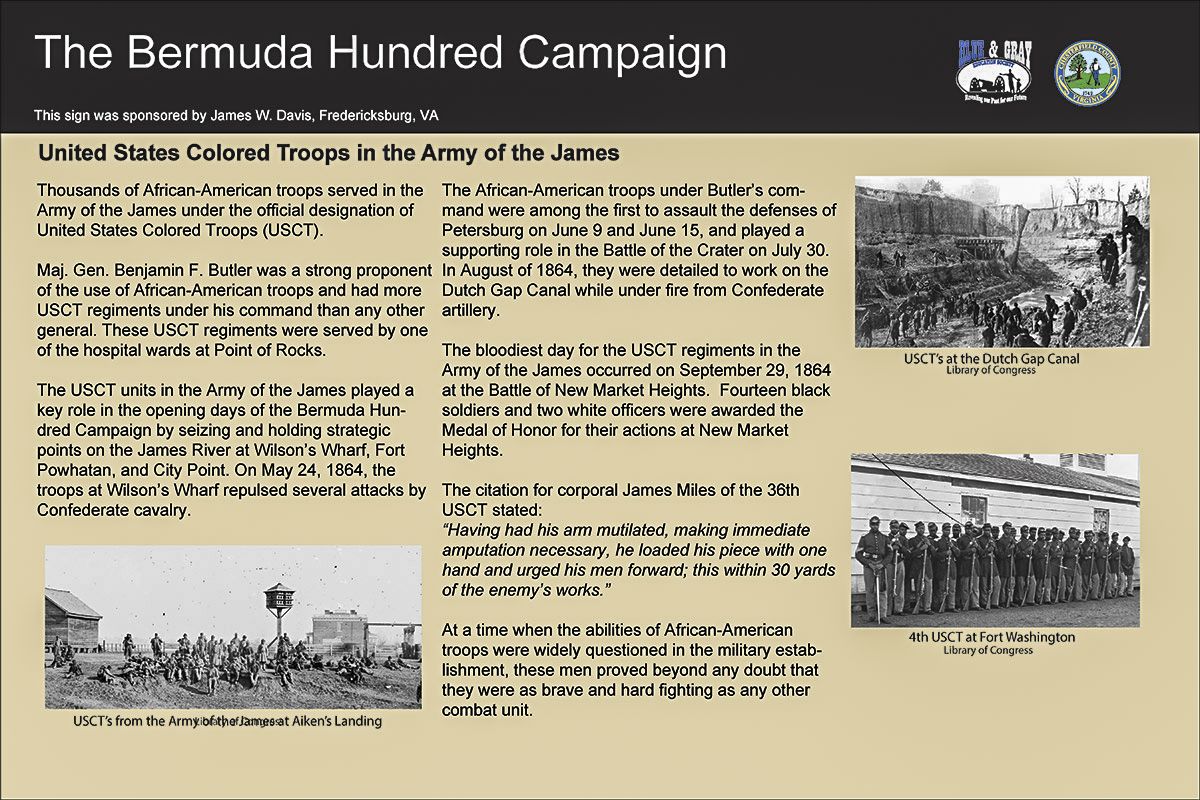
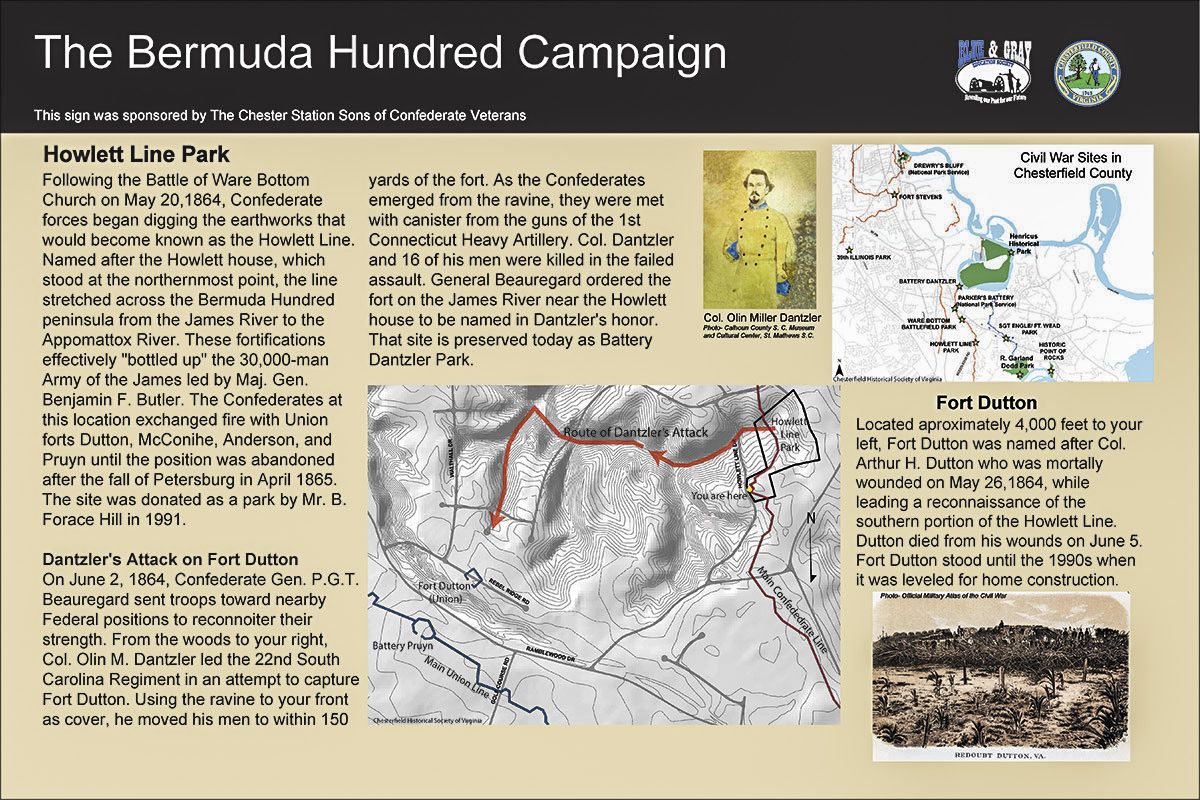
For one of our projects, the Bermuda Hundred Campaign Sign Project, we partnered with Chesterfield County’s Chesterfield Historical Society https://www.chesterfieldhistory.com/. Chesterfield Historical Society has done a wonderful job of preserving and promoting the county’s important role in the Civil War as well as its rich and substantial history from the Colonial and Revolutionary eras to the present time. BGES previously partnered with Chesterfield Historical Society to provide living history kits for reenactors to teach Civil War in the county schools. Then, in the Spring of 2014, Chesterfield Historical Society approached BGES with a farranging project that would link a wide number of county sites related to Union Major General Benjamin Butler’s May 1864 movement against key supply lines between Richmond and Petersburg. A detailed tour book was developed and published by Chesterfield County which compliments and supports the series of sites and interpretive panels. It is available for purchase from the Chesterfield Historical Society of Virginia. The signs were installed in 2015 as part of an Eagle Scout Project. Scouting projects also serve as a key partner with BGES projects in trail building, marker installation, and other site improvements throughout the country. Here is the story of our Bermuda Hundred Project where we sponsored 46 signs in less than a month, including sign sponsors Ed Bearss and author Herb Schiller: In May 1864, the powerful Union armies began coordinated and simultaneous assaults on Rebel forces throughout the South. Naturally, the eyes of both sides followed the titanic struggle between Confederate Commander Robert E. Lee’s Army of Northern Virginia and Union Major General George Gordon Meade’s Army of the Potomac under the direct observation of the United States’ General in Chief U.S. Grant and the advancement of William T. Sherman’s powerful army group in northern Georgia against the Confederate forces led by Joseph E. Johnston at Dalton. Three other Federal operations engaged smaller rebel units across the South that otherwise might have been used within the Confederate’s interior lines of communications to reinforce the most threatening forces. One such operation occurred near the Confederate capital of Richmond. Known as the Bermuda Hundred Campaign, Federal Major General Benjamin Butler—notorious for his tenure as commander of the Union forces occupying New Orleans— now returned to Virginia to lead the Northern Army of the James. Butler was instructed to move with his two-corps force up the James River to capture the key Confederate transportation center at Petersburg and threaten Richmond. Opposed by a scratch force of clerks, invalids, and a minimal amount of regular infantry, Butler failed miserably, and the 1864 Bermuda Hundred Campaign became emblematic of Butler’s military ineptitude. The operation should have compelled Lee to flee to Richmond to protect the city and its invaluable supply lines from Petersburg.
By “Leading From the Front,” We invite you to join America’s premier results-oriented Civil War education society. We depend on our members’ generosity to support our mission. BGES is a 501(c)(3) organization; therefore, membership donations are 100% tax-deductible. How to join. https://blueandgrayeducation.org/membership/. Thank you for your generous support of our work. I will look forward to seeing you on a battlefield soon!
Bob Robert D. Jenkins, Sr. Executive Director, Blue and Gray Education Society, Inc.