
The Unfinished Fight
A Few Thoughts on Rations
By Craig L. Barry · Originally published September-October 2026 · pp. 18–21
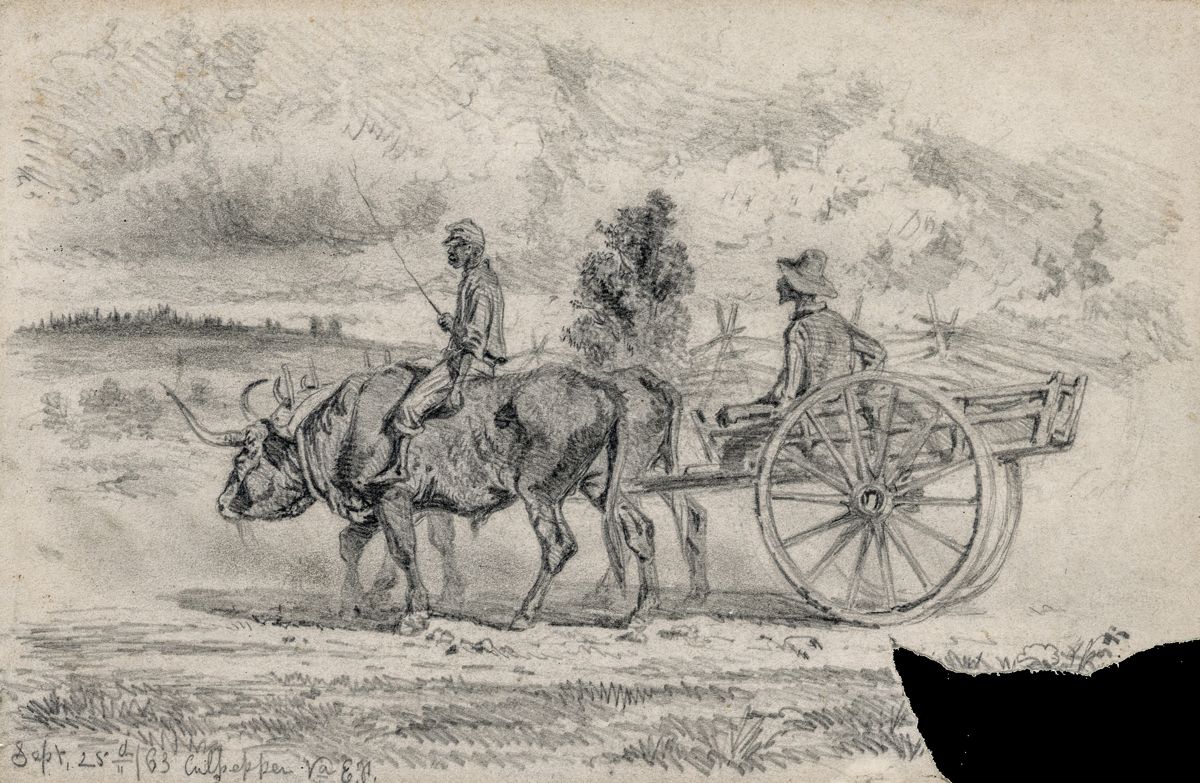
The accomplishments of Confederate forces during the U.S. Civil War, especially the continued success of the Army of Northern Virginia, are particularly noteworthy when considered against the obstacles they faced. Malnutrition, even early in the war, and poor sanitation damaged the health and fighting strength of an army that was often outnumbered by a better-fed and betterarmed opponent. Oddly, Confederate forces in the Western Theater were often better fed than those in the East, though perhaps not as well led. Napoleon reportedly concluded that the morale of his troops was three times more important to success than any other single factor, and maintaining that esprit de corps was the responsibility of senior leadership. However, Napoleon is also often credited with the observation that “an army marches on its stomach.” In Carlton McCarthy’s memoir, Detailed Minutiae of Soldier Life in the Army of Northern Virginia, he wrote:
“The Confederate soldier knows the elements of his success – courage, endurance and devotion. He knows also by whom he was defeated – sickness, starvation, death.” The disparity between the theoretical and actual Confederate diet was a problem not only of declining resources but also of logistics, inefficiency, chicanery, and a ponderous supply system. Rations sometimes reached the camps, but not regularly or in the expected amounts. McCarthy continued: “Sometimes there was an abundant issue of bread and no meat; then meat in any quantity and no flour or meal. Sugar in abundance and no coffee to be had for “love or money,” and then coffee plenteously without a grain of sugar. For months nothing but flour for bread and then
nothing but meal, till all hands longed for a biscuit, or fresh meat until it was nauseating; and then salt pork without intermission. To be one day without anything to eat was common. Two days fasting, marching and fighting was not uncommon, and there were times when no rations were issued for three or four days.” No discussion of Confederate rations would be complete without including peanuts. Period accounts suggest that when bread and meat were scarce, peanuts—also known as goober peas, pindars, ground peas, or ground nuts—were useful as an alternate source of protein. Since cooking facilities and other equipment were scarce, Confederate soldiers roasted peanuts over campfires or shelled them and fried them in leftover grease. Regardless of preparation, peanuts offered a high-protein ration that was light in weight and could be carried easily by a soldier on the march. Nutritionally, “a pound of peanuts…provides approximately the same energy value (in calories) as 2 pounds of beef, 1.5 pounds of Cheddar cheese, 9 pints of milk, or 36 medium-size eggs.”
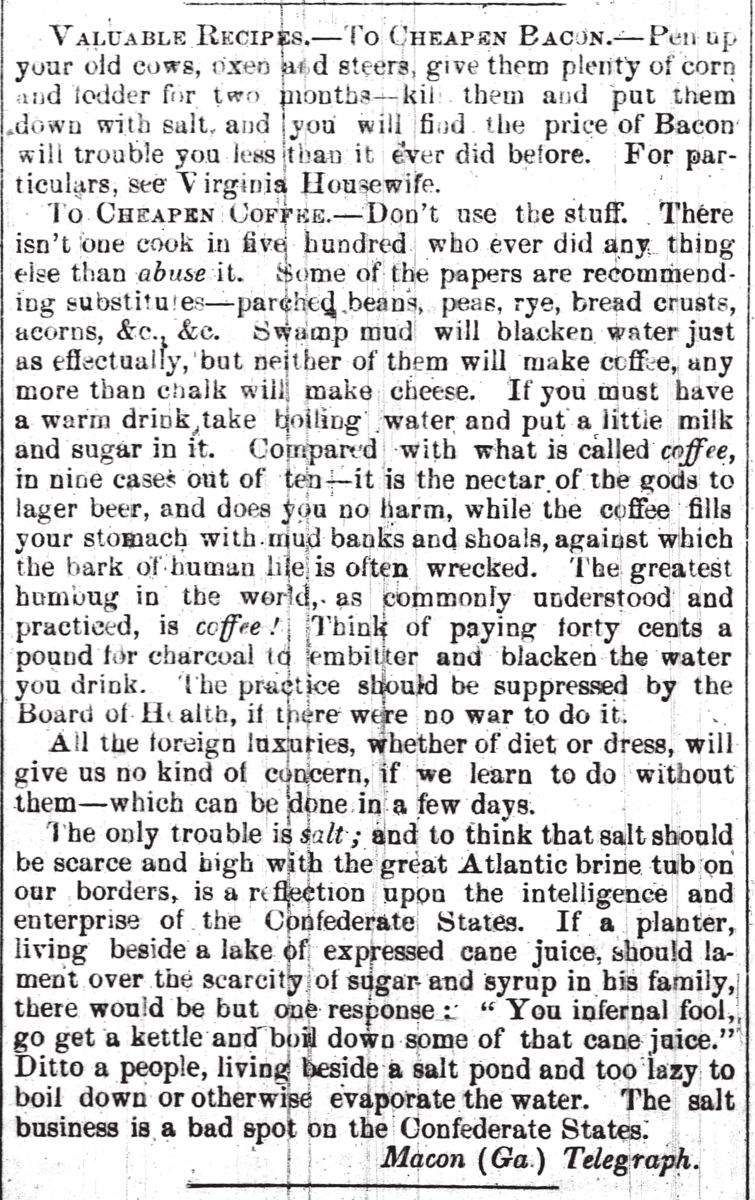
A raw, or “green,” peanut is not green in color. It takes 100 or more frost-free days to grow peanuts for consumption, and fresh green peanuts are usually available from May through November, primarily in Southern peanut-growing states. Peanuts grow best in sandy soil, especially along the coast or just inland. The varieties differ considerably. The king of the American peanut family is the so-called “Virginia” peanut. This variety has the largest kernels and is grown chiefly in southeastern Virginia and northeastern North Carolina, including areas around Suffolk, Waverly, Wakefield, and Surry, as well as portions of the Carolinas. The Lowcountry of South Carolina and the Georgia– Alabama region grow what is known as the common “Runner” variety, which features a smaller kernel with a more uniform size. The Runner peanut is the most widely grown U.S. type. Georgia remains the leading peanutproducing state. Farther west, especially in Texas and Oklahoma, the smaller redskin Spanish peanut is grown. This type has a higher oil content than the other major types. Peanut coffee was an odd beverage. Obviously, it was not coffee, since it contained no coffee beans, and it was not made solely from peanuts. It was an amalgamation of onethird cup peanuts, one-third cup rye or wheat, and one-third cup cowpeas. The three ingredients were roasted black, then ground and brewed. As far as this beverage goes, follow the advice from the Wilmington Journal of October 3, 1861: “Don’t use the stuff. There isn’t one cook in five hundred who ever did anything else than ruin it. Some of the papers are recommending substitute- parched beans, rye, peas, acorns, etc. Swamp mud will blacken water just as effectually, but neither will it make coffee…Think of paying forty cents a pound for charcoal to embitter and blacken the water you drink. The practice should be suppressed by the Board of Health, if there were no war to do it.” Save the peanuts for eating, especially if they are Virginias.
Craig L. Barry was born in Charlottesville, Va. H e holds his BA and M asters degrees from UNC (Charlotte). He is the author of several books including T he C ivil W ar M usket : A H andbook for H istorical Accuracy (2006, 2011), The Unfinished Fight: Essays on Confederate Material Culture Vol. I and II (2012, 2013). He has also published four books in the Suppliers to the Confederacy series on English Arms & Accoutrements, Quartermaster stores and other European imports.