
This & That
By Gould Hagler · Originally published July-August 2026 · pp. 50–52
& I
A Closer Look at the Cast – Part 3 This & That
n the two previous issues, I wrote about three men who played various roles in the tense standoff in Charleston Harbor between Lincoln’s election in 1860 and the following April, when the Confederates bombarded Fort Sumter and forced its surrender. This column will cover a fourth who, like the others, has a name familiar to most of us. Less familiar to me, and others I am sure, are the details of this man’s life and his role in the Civil War. While the bombardment was still underway, the subject of this column commandeered a boat and ordered two slaves to row him to Fort Sumter, where he negotiated the terms of surrender with Maj. Robert Anderson. The fact that he had no authority to do any such thing did not pose an obstacle
Brig. Gen. Louis Wigfall. (Library of Congress)
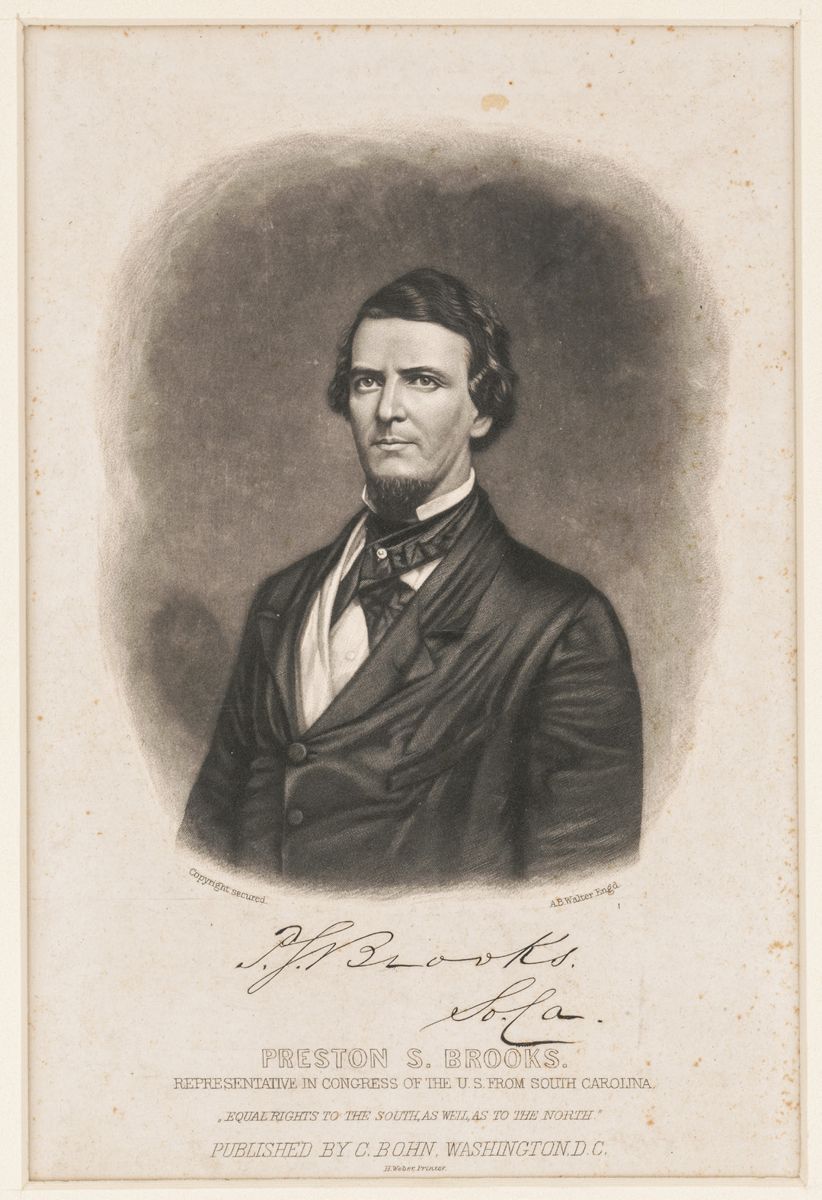
to Louis Trezevant Wigfall. He forged ahead the only way he knew—at full speed. Wigfall’s family, on both his father’s and mother’s side, was part of South Carolina’s Low Country elite. In 1814, two years before Louis was born, the family moved inland to the Edgefield District, where Louis was born and raised. The future Fire-eater was orphaned, losing his father when he was two and his mother 11 years later. Using Louis’s inheritance of $13,000, his guardian made sure the young man received a well-rounded education at an academy near home, at the University of Virginia, and finally at the University of South Carolina. He graduated from the University of South Carolina in 1837; in 1839, he was admitted to the bar. Wigfall had a way of creating trouble for himself and for others. He had a hot temper, a heightened sense of honor, a quickness to take offense, and a habit of overindulging in alcohol. During his year at Virginia, Wigfall nearly fought a duel over what was, or should have been, a trivial matter. Later, in South Carolina, after leaving the university and entering politics, he “was involved in a fistfight, three near-duels, two duels, and one shooting – all of which left one dead and two, including Wigfall, wounded.”1 His own wound was the outcome of a political feud with the powerful Brooks family. In a duel with Preston Brooks in 1840, Wigfall was shot in the thigh and Brooks through the hip.2 Wigfall was also a wastrel. From a young age until his death, he was plagued by debt and hounded by creditors. Wigfall was 16 during the Nullification Crisis of 1832. The events of those tense days made “a deep and abiding impression”3 on the bright and politically aware youth. Throughout his pre-Civil War career, he fought passionately for state sovereignty, for the institution of slavery (including slavery in the territories), and for a southern route for the planned transcontinental railroad. With the same intensity, he waged political war against protective tariffs, the Homestead Act, and a strong central government. He argued that the Constitution was a compact agreed to by individual states, sovereign polities that never yielded their sovereignty. A state could withdraw from this federation for any reason it saw fit, and was answerable to no other entity, only to its own people.
The characteristics displayed by Louis Wigfall and his political views were not unusual for men of his class, his state, and his time. He did stand out, however, for the unrestrained fervor with which he exhibited these traits. He was openly in favor of disunion as early as 1844. The year following his duel with Brooks, Wigfall married and continued to practice law, a profession that always took a second place to politics. The financial troubles worsened. In 1846, the Wigfalls lost everything. All their assets were sold at sheriff’s sales, yet there were still unsatisfied debts. That year, Wigfall left for Texas and was later joined by his wife and two children. Making a fresh start, the new Texan focused more on earning a living, but he still devoted more energy to politics and still lived close to the edge financially. His reputation followed him from South Carolina, but there were no more duels: his biographer, Alvy King, suggested that other men were careful not to cross him. The South Carolina transplant rose to prominence in the Texas Democratic Party and was the leader of the state’s radicals. He clashed with Texas hero Sam Houston, who opposed the radicals and their fire-eating calls for secession. In 1859, Wigfall, in a hard-fought and close battle in the legislature, was elected to represent Texas in the United States Senate.4
Preston Brooks. (Library of Congress)
In the U.S. Senate, he continued to be disputatious and combative. In debate, he was eloquent, quick-witted, theatrical, and full of humor, biting sarcasm, and invective. Lincoln was elected 11 months after Wigfall took his seat in the Senate. The bonds holding the United States together, already frayed, finally broke. Wigfall stayed in the Senate for a short time, even after Texas seceded on March 2, 1861. He busied himself taunting other members of the Senate and keeping friends in South Carolina apprised of events in Washington. On March 28, he resigned his seat and left for Charleston. Wigfall’s 17-year dream of a separate Southern nation was finally achieved. In Charleston, he made stirring speeches to jubilant crowds. He reveled in the attention. Once in Charleston, Wigfall accepted a volunteer aide position on the staff of Brig. Gen. P.G.T. Beauregard. On the morning of April 13, some 30 hours after the bombardment began, Wigfall appeared at the fort. He falsely claimed to represent Beauregard and reached an agreement with Maj. Anderson for the surrender of the fort. After some understandable confusion, Beauregard and Anderson reached terms essentially the same as those Anderson had reached with the free-lancing Wigfall.5 The Federal garrison was evacuated. The Confederates occupied the fort. The Civil War had begun. Wigfall donned a general’s uniform, but only for a brief time: he made his mark representing Texas in the Confederate Senate. The man under this new hat was unchanged. The Confederate senator was as combative, headstrong, and uncompromising as before. Wigfall advocated a military strategy focusing on the concentration of forces, rather than distributing armies in an effort to defend territory. Early on, he supported conscription, and over time, he advocated for it with fewer exemptions and broader age limits.6 He introduced a bill in 1862 to allow the president to suspend habeas corpus, a measure to prevent draft delinquents from being released by local judges. He did, however, favor the 20-slave exemption, as the large plantation owners were needed to oversee their labor in support of the war effort. It is interesting that Wigfall favored strong war measures even when it meant strengthening the powers of Richmond and curtailing the powers of the several states. Throughout his career, he had held the opposite view, insisting that the states were sovereign polities and that the thing in Washington was merely the agent of these polities. A state could withdraw the duties assigned to the agent and terminate the agreement. He went so far as to claim that the United States did not even have a national government. Under the pressure of war, he changed his philosophy, being concerned “more with military might than in state or individual rights.”7 On issues such as impressment of supplies, conscription, punishment for desertion and government control of railroads he consistently advocated for strong measures to maximize the war effort. The senator interjected himself into controversies without the circumspection and tact a more prudent legislator would have shown. He clashed with Pres. Jefferson Davis over various issues. He blamed the president when the victorious army did not follow up the victory at First Manassas by pursuing the Federals to Washington. He was critical
man with a price on his head. He forged a parole document and gave himself the name A.J. White. “Private White” left Mrs. Wigfall and daughter Louly with friends in Alabama and continued on to Texas. There he lay low for a year, then sailed to England, where his family later joined him. The postwar years were not kind to the aging Fire-eater. He was unable to earn enough to relieve the financial stress that had cursed him all his life. He returned to the United States in 1870. He lived in Baltimore for a while and continued to dream of a Southern nation. Toward this end, he even tried to foment a war between the U.S. and Britain. In January 1874, Wigfall moved back to the state he had represented in both the United States Senate and the Confederate Senate. He died the following month. Sources: Louis T. Wigfall: Southern Fire-eater, by Alvy L. King; The Demon of Unrest, by Erik Larson Endnotes: 1. 2.
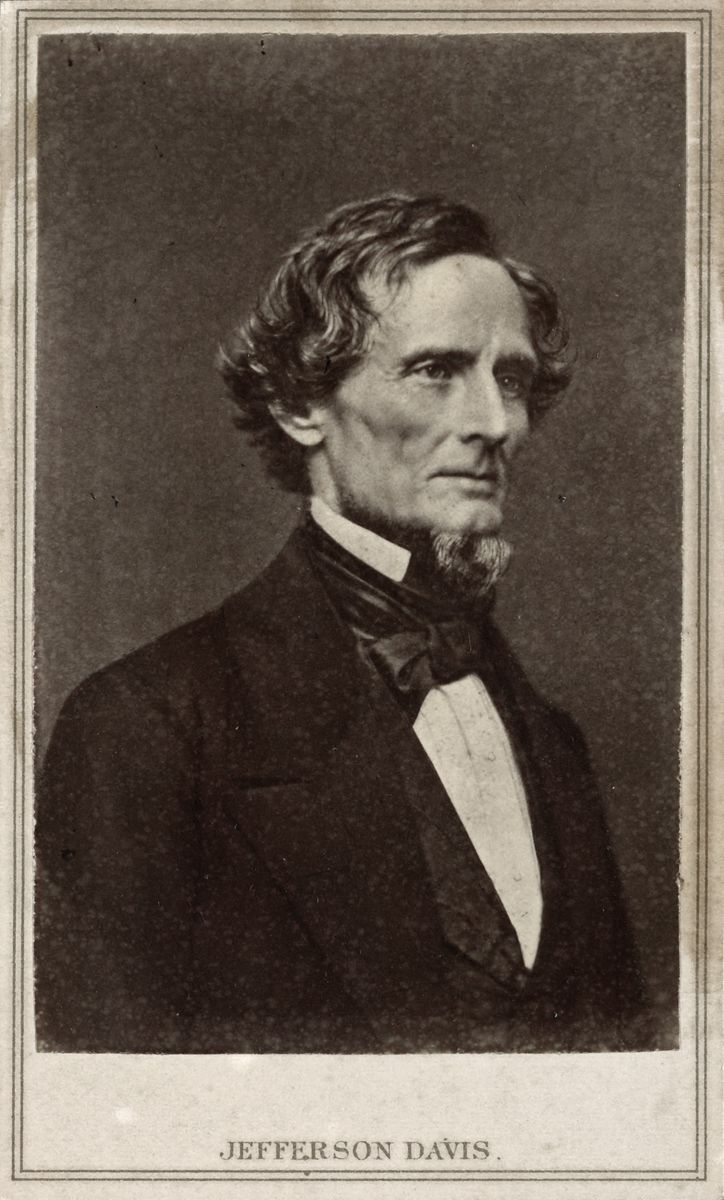
Jefferson Davis. (Library of Congress)
of Davis’s decision to keep Col. Lucius Northrup as the army’s commissary general, long after Northrup’s poor performance was apparent to all. Wigfall resented Davis’s veto of his bill to enlarge and strengthen generals’ staffs. Perhaps most serious, and certainly the most personal, was Wigfall’s siding with his friend Gen. Joseph Johnston in the famous dispute over Johnston’s relative rank among the army’s full generals. Late in the war, as the Confederacy’s prospects for victory dimmed, Wigfall sought to weaken the power of the executive and create what biographer King terms “a senatorial hegemony.”8 As the war progressed, the breach between these two headstrong men grew more severe and more public. Wigfall was quarrelsome to the end. On the very last day the Confederate Senate met, Wigfall made an oral report fixing the blame on Davis for the loss of Atlanta and voted to overturn two presidential vetoes. Wigfall was not in Richmond when the capital fell. He had left for Texas and learned the news in Charlotte. As he moved southwest, he received more disturbing news: Lee’s surrender at Appomattox and Johnston’s surrender at Bennett Place. He also discovered that he was a wanted
King, p. 29. King speculates that this wound was the reason Brooks was carrying a cane when he attacked Senator Charles Sumner on the Senate floor 14 years later (p. 34). King, p. 6. Wigfall’s radical views and unorthodox style at first weighed against his candidacy. However, John Brown’s raid in 1859 raised alarms about abolitionist-inspired slave revolts and won more state legislators to his side (King, pp. 70–76). Wigfall enjoyed talking about his adventure, and Charlestonians enjoyed hearing his lively account. The famous British journalist, William H. Russell wrote about this eccentric American, who, inspired by “Bacchus or Bourbon,” spoke energetically with “strong illustrations and strange expletives” (Russell’s My Diary North and South: The Civil War in America, quoted in King, p. 122). In 1863, he proposed a bill mandating service for all men ages 16 to 60 (King, p. 146). King, p. 150. King, p. 187.
Gould Hagler is a retired lobbyist living in Dunwoody, Ga. He has been a regular contributor to CWN since 2016. He can be reached at [email protected].
Ulysses S. Grant
HQ:
generalgrantbyhimself.com
E-Telegraph:
curtfields@ generalgrantbyhimself.com
Portrayed by E.C. Fields Jr., Ph.D.
Signal Corps: (901) 496-6065 Facebook@ Curt Fields
Photographs from the Original Article
Captions and credits appear in the article text as originally printed.