
47th Southeastern Civil War Show & Antique Gun show News
By Craig L. Barry · Originally published November-December 2025 · pp. 17–19

risks, of course, were addiction, overdose, nausea, and noted, “We have little more than indigenous barks and roots respiratory suppression. with which to treat various forms of disease…” This is not Blue mass was the other most common remedy during necessarily as bad as it seems. Approximately two-thirds the Civil War. Although the ingredients that went into blue of the medicines listed in the United States Pharmacoepia mass varied tremendously, it always contained some quantity of mercury, which can be quite toxic. Blue mass was used as a treatment for numerous conditions, including constipation, toothache, and “consumption” (tuberculosis). Dr. Walter Taylor, a surgeon with the 19th Virginia, was said to have carried a lump of blue mass in one pocket and a lump of opium in the other. Soldiers with diarrhea were given opium, and those who were constipated were given blue mass. Nearly every soldier the doctor encountered received one of these two universal treatments. Non-drug related therapies included bleeding, so the harsh chemical agents may not have been the worst option for the patient. However, as the Union blockade became more effective, in time, even those basic medications were in Field hospital, Second Army Corps, Brandy Station, negative by J. Gardner, short supply. One physician positive by A. Gardner. (Library of Congress)
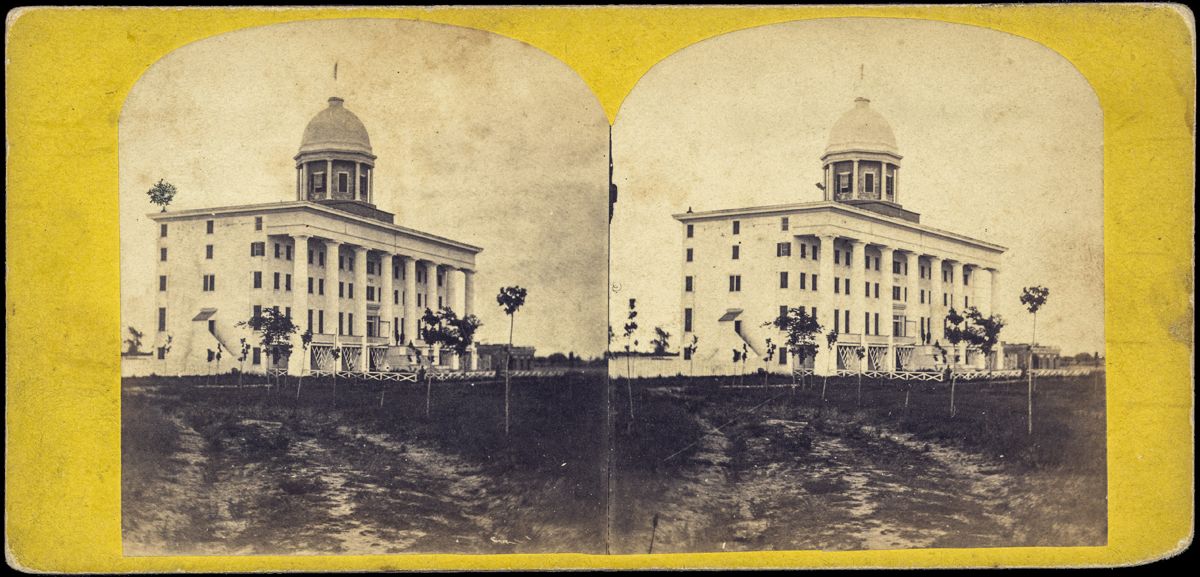
Chesapeake Hospital, Fortress Monroe, Va. (Library of Congress)
were plant based, and a number of plants were indigenous only in the Southern states. From a physician’s perspective, this was one of the few bright spots of the Civil War in that “…it called our attention to the wealth of medicinal agents and remedies right in our own fields, forests and plains.” Most medicines were prepared as a tincture or decoction in an alcohol base, which was not usually in short supply. The government advertised for citizens to grow and provide various herbs and plants, as well as provide any bottles and corks for storing the medicines once produced. What were some of the substitute medicines used by physicians and surgeons in Confederate hospitals? To get an idea of the prices for medicinal ingredients in Richmond as of June 1863, here are some articles and their cost from the original invoices, as follows:
Three boxes logwood, 47 lbs. at $4 per lb.; 1 keg bicarbonate, soda, 112 lbs. at $2.75; 1 barrel camphor, 86 lbs. at $20.00; 112 lbs. of blue galls at $4; 100 lbs. tartaric acid, $2.25 per lb.; salt, 44c. lb.; hops, $2.50 lb.; one cask French brandy, $52.00 gallon; phosphorous, $14.00 per lb.; citric acid, $4.50; oil peppermint, $16.50; Epsom salts, $3.87 1/2; 6 bottles capsules, $6.50; 12 pewter syringes, $1.25 each; 2 boxes blue pills, $6.00; 1 bottle syrup of Ipecac, $10; 15 ozs. Quinine $22.25 per oz.; 60 drams morphine, $28 per dr.; blacking, $1.40 per box. A surviving Confederate surgeon was interviewed postbellum about common treatments during the Civil War. He recalled: “During the early part of the war, I was placed in charge of a railroad hospital in a small town where it was difficult to obtain medicine at almost any cost, and as I had my little hospital crowded nearly all the time, both with employees of the (rail)road and wounded and sick soldiers, afflicted with various diseases and all kinds of wounds and injuries, and being also engaged in general practice, it naturally followed that my mind was severely taxed in order to supply the remedies and substitutes to meet the demands of such varied practice. I perused my dispensary and called into requisition an old botanic practice which had been handed down as a relic of the past, but from which I confess to have received valuable aid and very many useful hints in regard to the medical virtues of our native plants. I give you the following facts from a record I kept of the patients treated, and the remedies I used, and the principal substances I resorted to: “Of that large class of medicines, so useful in surgery and so much in demand in war times, called antiseptics, most of them, I may say, have been discovered and appropriated to surgical use since the war. In fact, I had but little else at my command except
the cold-water dressing for wounds. From experiment I learned to improve on the plain old method, as I think, by employing a decoction of red-oak bark added to the water, which acted as a disinfectant, and by its stimulating and astringent properties promoted the healing process. I also used a weak solution of bicarbonate of soda, which I found beneficial in the suppurative stages. When emollients were indicated, I used slippery elm and wahoo root bark, and solution of common salt often helped. In case of great pain I employed poppy heads, nightshade and stramonium. I had a number of cases of intermittent fever. I would give strong boneset tea, warm, until free vomiting was produced, and as a substitute for quinine I used, during the intermission, butterfly root or pleurisy root tea, which would nearly always shorten the febrile stage. Bilious fevers were treated much the same way, except that I invariably gave good doses of mandrake tea in the febrile stage. Virginia snake-root, yellow root, or Sampson’s snake-root acted nearly as well, but I preferred the other. If I could have obtained blue mass or calomel I would have begun treatment with that, but none were to be had. Mayapple root or peach-tree leaves made into a strong tea and drank warm would act on the bowels as certainly as senna; but with children where too much tea is not desirable, I often gave hog’s feet oil, or even lard heated with syrup. “In cases of pneumonia, pleurisy, catarrhal fevers, etc., I made local applications of mustard seed or leaves, stramonium leaves, hickory leaves, pepper, etc., warm, and gave alternately butterfly-root and sanguinaria, and continued to slightly nauseating, from day to day (no need of anything else). The two last-named remedies took the place of Dover’s powder, quinine and all other diaphoretics, febrifuges and arterial sedatives. Phytalacca or poke was another favorite remedy—the tincture when alcohol or whiskey could be obtained; otherwise, tea of roots or berries. I used it in all cases of chronic rheumatism or neuralgia, enlarged glands, scrofula, syphilis, and all cases requiring alteratives, often combined with American sarsaparilla root, sassafras, alder and prickly ash. “In stomach and bowel diseases I found but little difficulty in obtaining plenty of substitutes for opiates, astringents and the like; in fact, I believe that an all wise Providence has especially provided the best antidotes in creation on the hills and dales, and by the vales and streams of our own Southland. In ordinary loose-ness of the bowels or diarrhea, I gave an infusion of raspberry leaves or whortleberry leaves (both of which act finely on the kidneys and bladder). Where there was nausea or sick stomach, a handful of peach leaves steeped in water and drank will settle it, or what is perhaps better, the kernel of two or three seeds cracked and cold water drank off of them. If stronger astringent is necessary, the inner bark of red oak, blackberry or dewberry root tea, or red shank root, are sure remedies. Agrimony tea,
and, as a last resort, the nut-gall or ink-ball made into what, from its color, I called black wash (made by squeezing the juice out and adding a little copperas). This black wash is not only a splendid ink, but is a destroyer of syphilitic sores, warts, corns, ringworm, and old ulcers and excrescences of nearly every kind, much superior to lime water and calomel. Weakened properly, it is good in obstinate bowel diseases, and can be used as an injection in gonorrhea, gleet, etc. Silk weed root put in whiskey and drank, giving at the same time pills of rosin from the pine tree, with very small pieces of blue vitriol will cure obstinate cases of gonorrhea, and is a substitute for copaiba, cubebs, etc. I raised lobelia from the seed, and found it to be a reliable emetic, useful in cough medicines, croup and asthma. I have relieved asthma with lobelia, and by smoking stramonium leaves. We, of course, used turpentine as an adjunct in all cases where indicated, which is the case in very many diseases, and in many a positive curative agent. Onions and garlic were used as poultices in nearly all glandular enlargements, as are also poke-root, celery, pepper, parsley, sage, thyme, rue and other garden products. White sumac, red elm, prickly ash, and poke, will in connection with my black wash cure recent cases of syphilis. It will also cure many cases of chronic rheumatism. Peach-tree leaves and Sampson’s snake-root will cure most cases of incipient dyspepsia. Gargle made of sage and honey will cure most cases of sore throat, tonsillitis, etc.”
Nearly every old practitioner in the South today is full of such reminiscences as the foregoing. The main trouble with vegetable-based remedies is that they have no effective antimalarials or substitute for opium as a painkiller. The invoice prices suggest the lack of effective substitutes for these two medicines and the fact that they had to be smuggled in or captured from the North. The only two factories in America that produced quinine during the U.S. Civil War period were both located in Philadelphia. The other source of medicine came from the category best labeled “Home Remedies.” These were a decidedly mixed lot as well.
Craig L. Barry was born in Charlottesville, Va. H e holds his BA and M asters degrees from UNC (Charlotte). Craig served The Watchdog Civil War Quarterly as Associate Editor and Editor from 2003– 2017. The Watchdog published books and columns on 19th-century material. He is the author of several books including The Civil War Musket: A Handbook for Historical Accuracy (2006, 2011), The Unfinished Fight: Essays on Confederate Material Culture Vol. I and II (2012, 2013). He has also published four books in the Suppliers to the Confederacy series on English Arms & Accoutrements, Quartermaster stores and other European imports.
Photographs from the Original Article


Captions and credits appear in the article text as originally printed.