
THE UNFINISHED FIGHT:
By Craig L. Barry · Originally published November-December 2024 · pp. 8–12
A FEW THOUGHTS ON HAT INSIGNIA
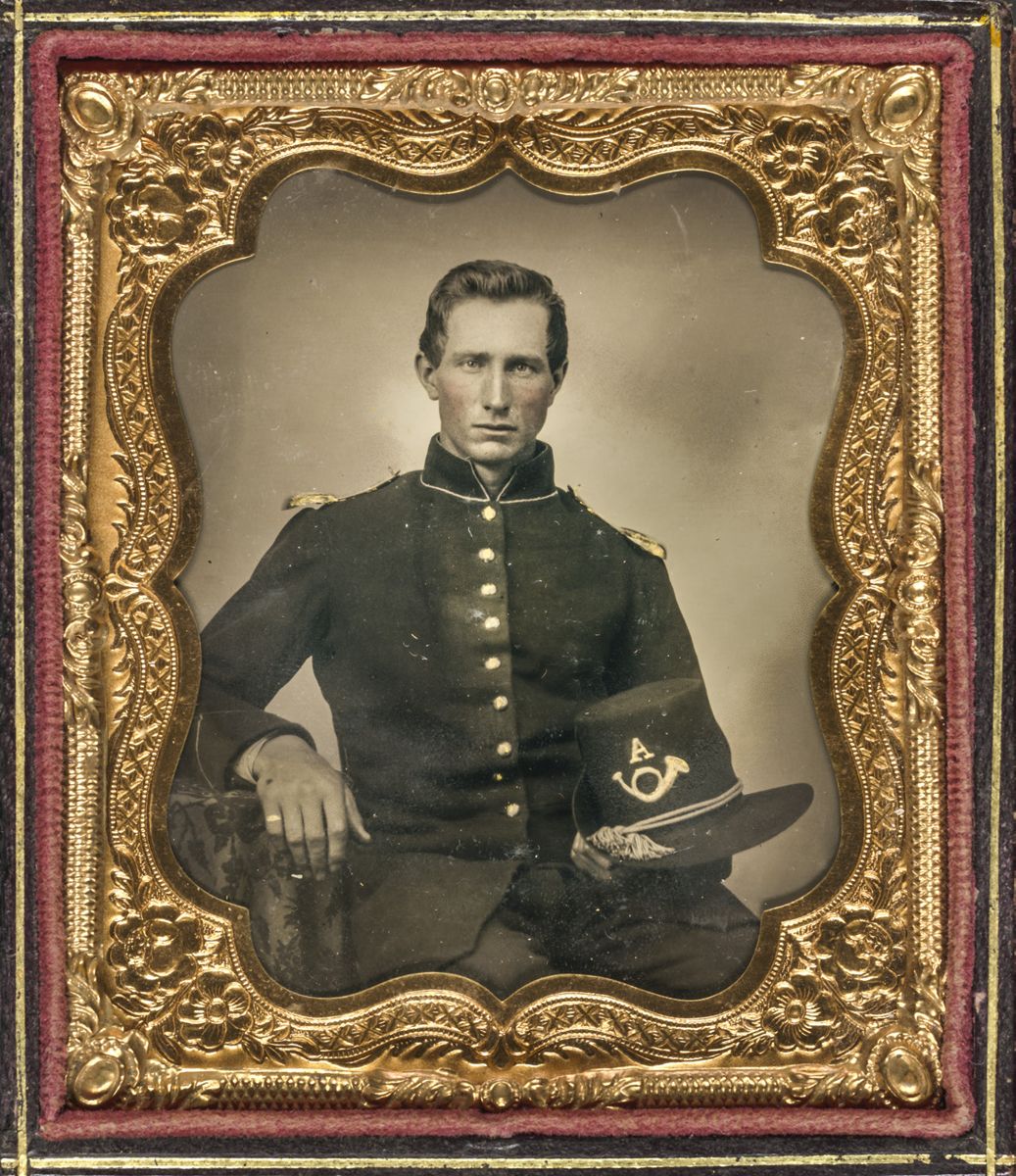
The images accompanying this column are straightforward, chosen to highlight a specific historical point. A decade before the Civil War erupted, the U.S. military updated its insignia. The War Department introduced metal insignia for U.S. accoutrements, while the Ordnance Department issued insignia for soldiers’ uniforms. During the war, hat insignia were indeed used, but not to the extent seen at modern living history events. Some period photographs depict Union infantry privates wearing the brass insignia on their forage caps in the commonly accepted style. However, there are also images showing the infantry horn insignia in unusual positions, possibly one of the so-called “false metallic” horns with tassels at the bottom, originally intended for officers. The enlisted men’s branch insignia, typically stamped in brass, were designed to be worn on the front of the 1858 enlisted dress hat—often referred to as the Jefferson Davis hat, though less accurately as the Hardee hat (See Figure 1). The design of the forage cap made it difficult to affix insignia directly above the brim. Some soldiers took to fastening brass insignia on the top of the forage cap, as seen in Figure 2 and 3, though this practice was not sanctioned by U.S. Army regulations. Officially, the regulations specified that forage caps should only have “…yellow metal letters in front to designate companies.” The brass infantry horn, regimental number, and company letter were meant for the enlisted dress hat only. Different branches of the military had their own insignia: engineers used a castle, cavalry
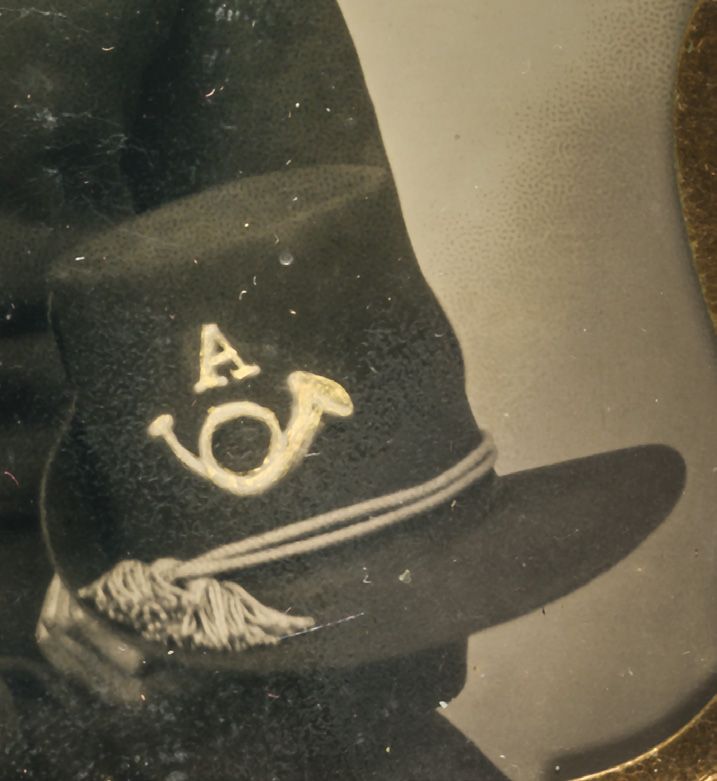
Figure 1. Unidentified soldier in Union infantry uniform with shoulder scales holding Hardee hat with Company A insignia over a brass infantry horn insignia. ( Images courtesy Liljenquist Family Collection of Civil War Photographs, Library of Congress.)
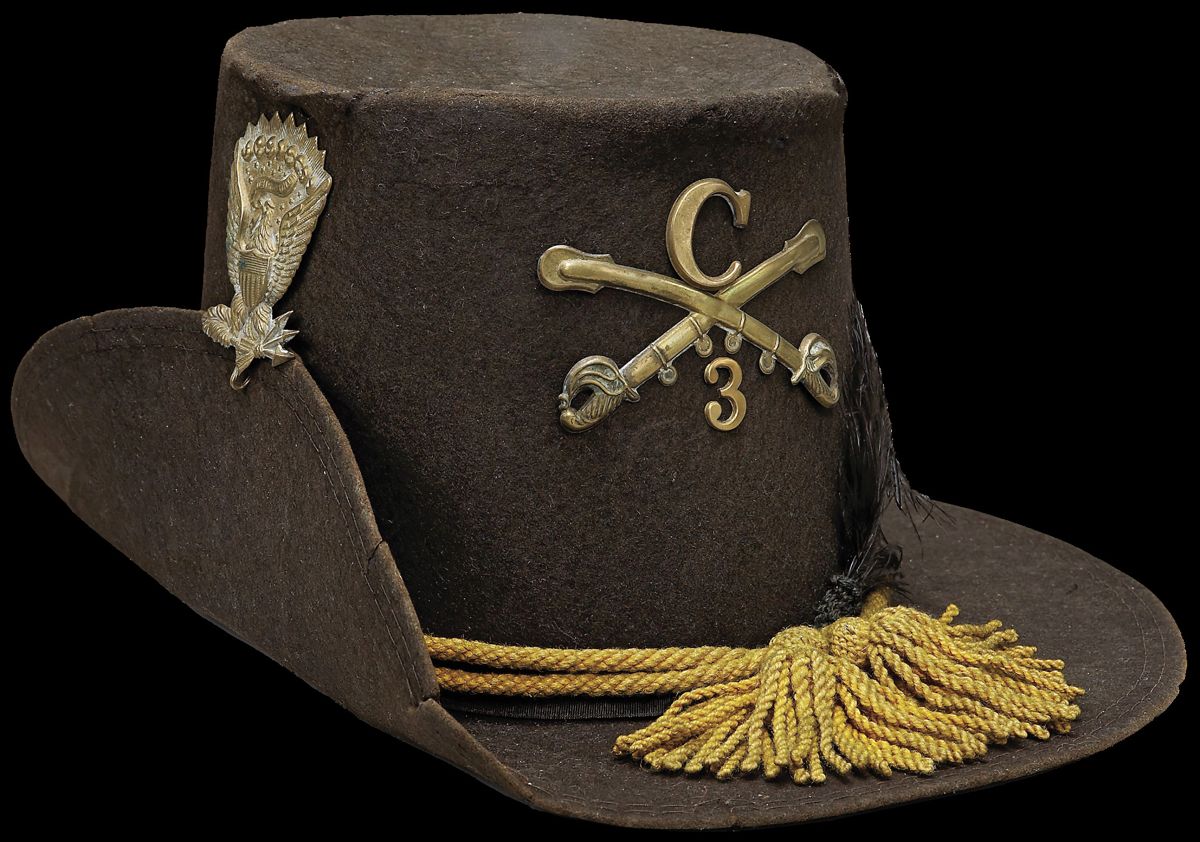
MODEL 1858 DRESS “HARDEE” HAT
The Hardee hat, also known as the Model 1858 Dress Hat and sometimes nicknamed the “Jeff Davis,” was the regulation dress hat for enlisted men in the Union Army during the American Civil War. In General Order #13, dated August 15, 1855, the new cavalry hat is described as follows: “…prescribing the arms and accouterments of the two cavalry regiments, the hat is as follows: For Field officers—Black, trimmed with gold cord, and according to pattern in the Quartermaster’s Department; to be looped up on the right side, and fastened with an eagle, the eagle being attached to the site of the hat; three black feathers on left side; the number of the regiment to be in front. The hat will be worn instead of the cap now used by the other troops. For all other Officers—same as for field Officers except that there will be but two black feathers. For enlisted men, same as for officers, except there will be but one black feather, a worsted, instead of a gold cord, and the letter of the company substituted for the number of the regiment.” The Hardee hat was also worn by Confederate soldiers. However, most soldiers found the black felt hat to be too hot and heavy and shunned its use, preferring a forage cap or slouch hat. The unadorned, plain, and often field-modified Hardee hat was worn by Union troops, especially in the Western theater. The Hardee hat was most famously worn, and easily identified, as the hat worn by the Union Army of the Potomac’s Iron Brigade; it became their trademark and the men were popularly known by the nickname, “The Black Hats.” (Courtesy Heritage Auctions).
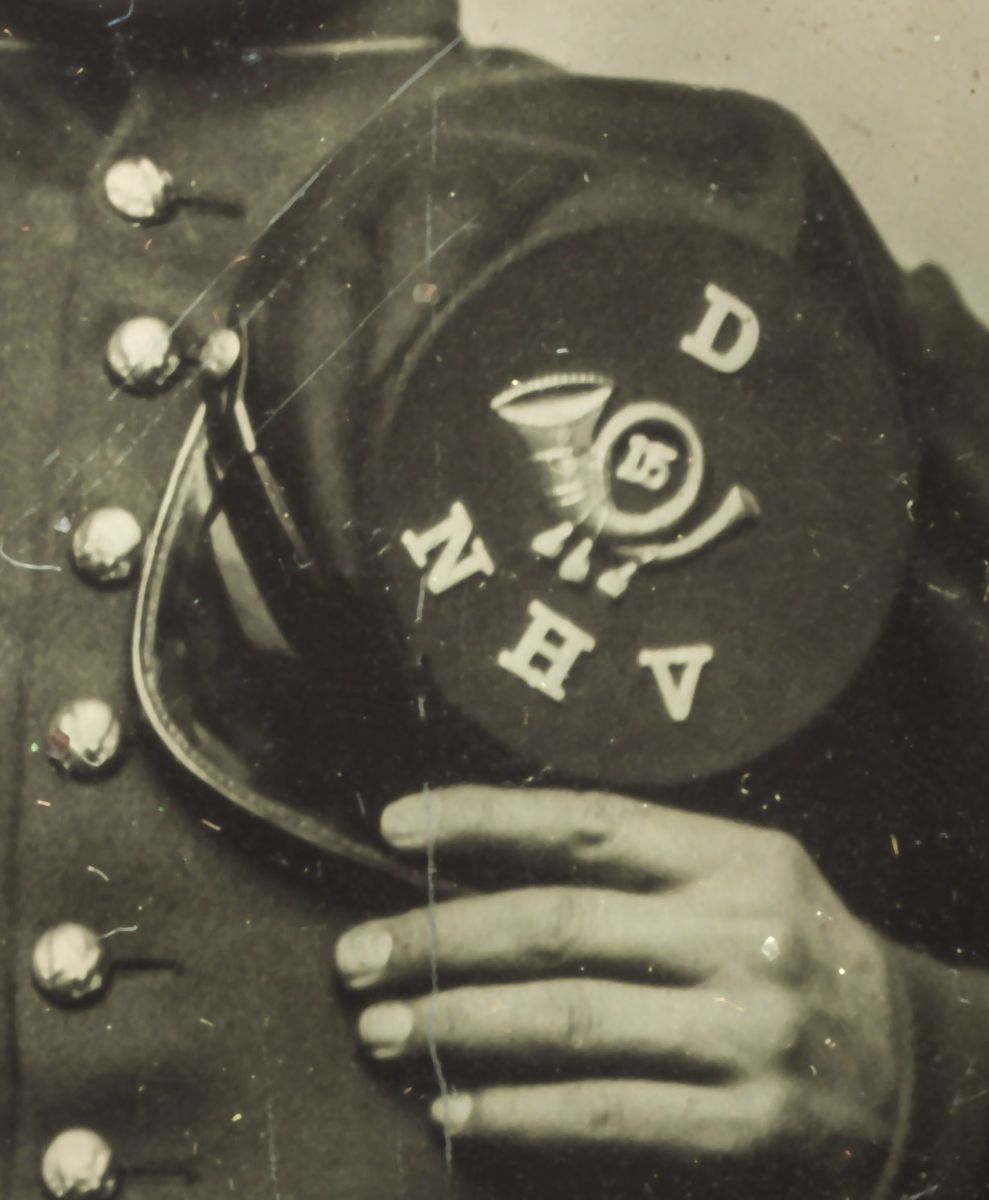
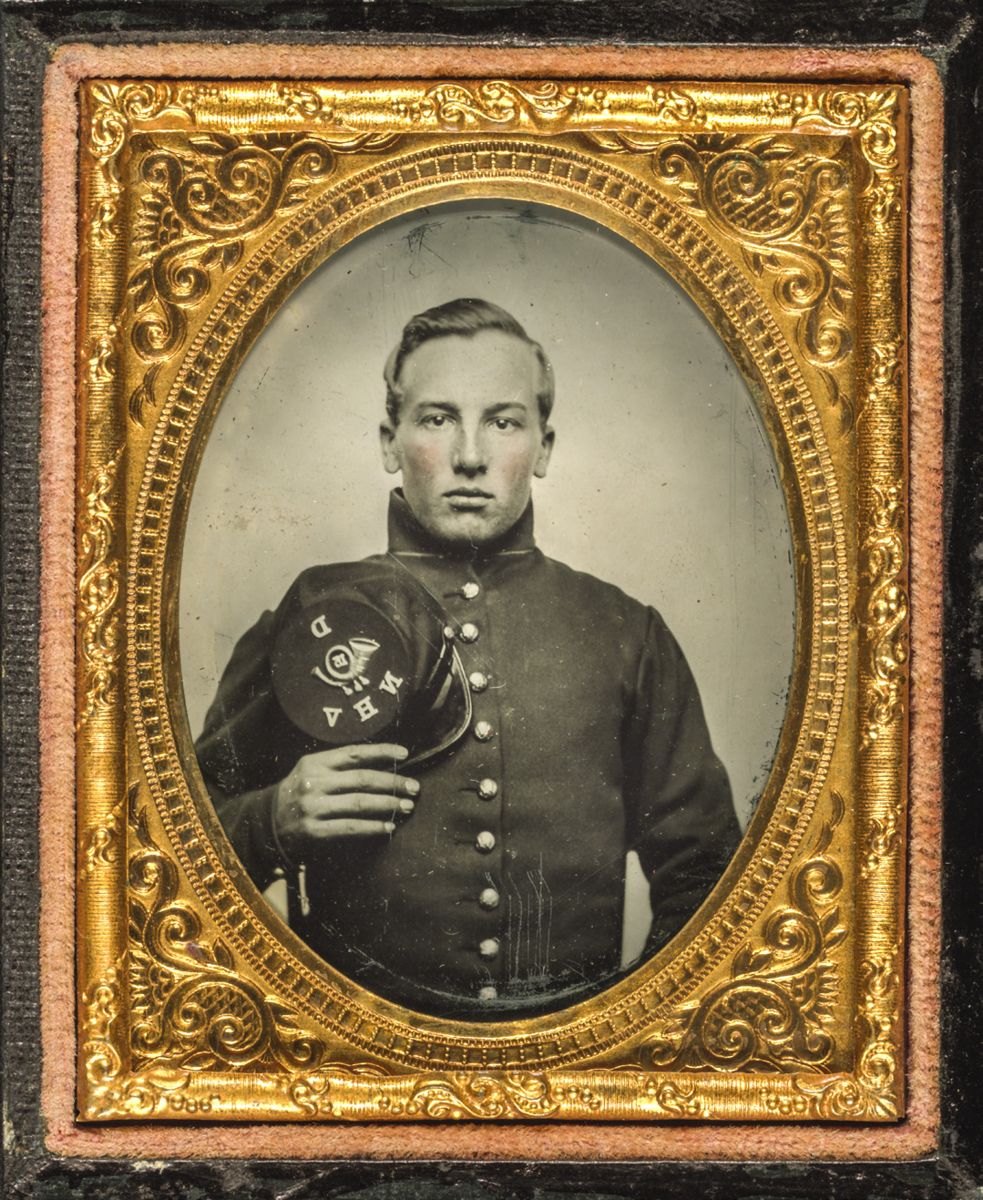
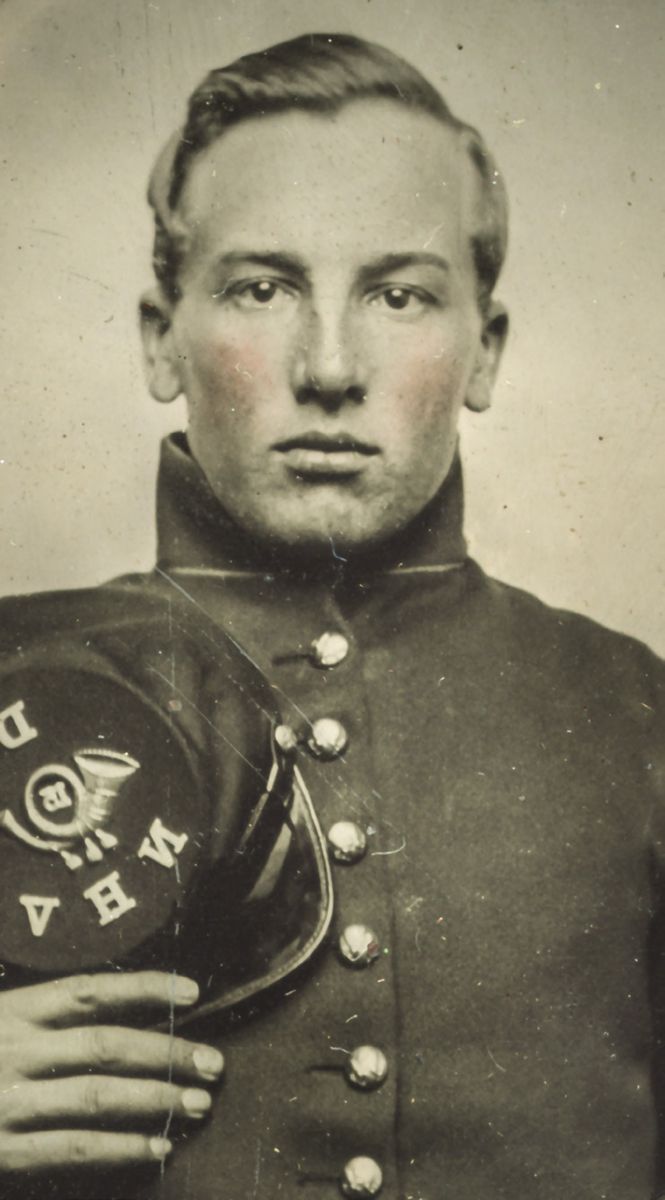
Figure 2. Unidentified Union private holding Company D, 15th New Hampshire Volunteers forage cap over heart. There is a brass infantry horn insignia with the number 15 inside the horn.
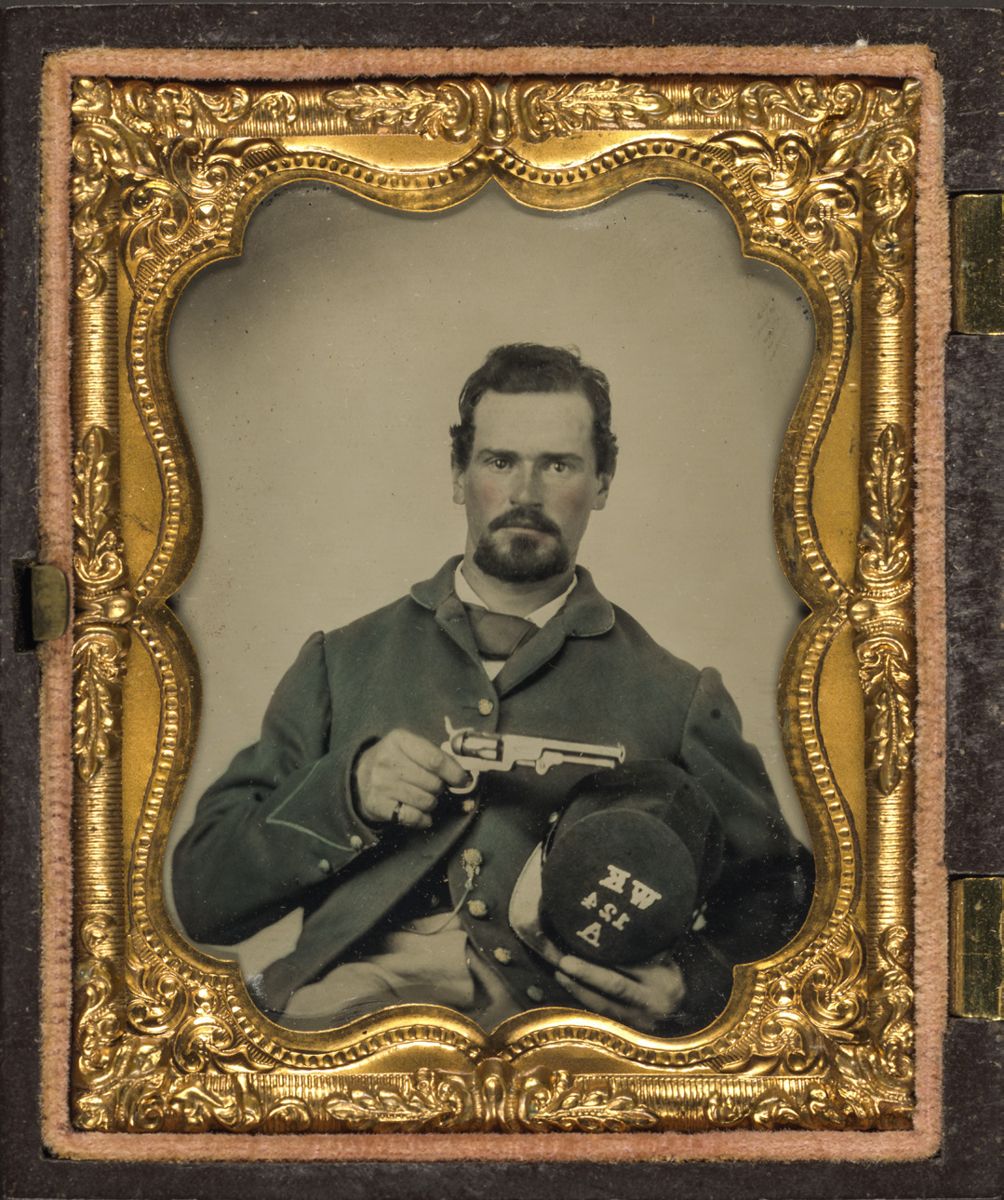
Figure 2, reversed.
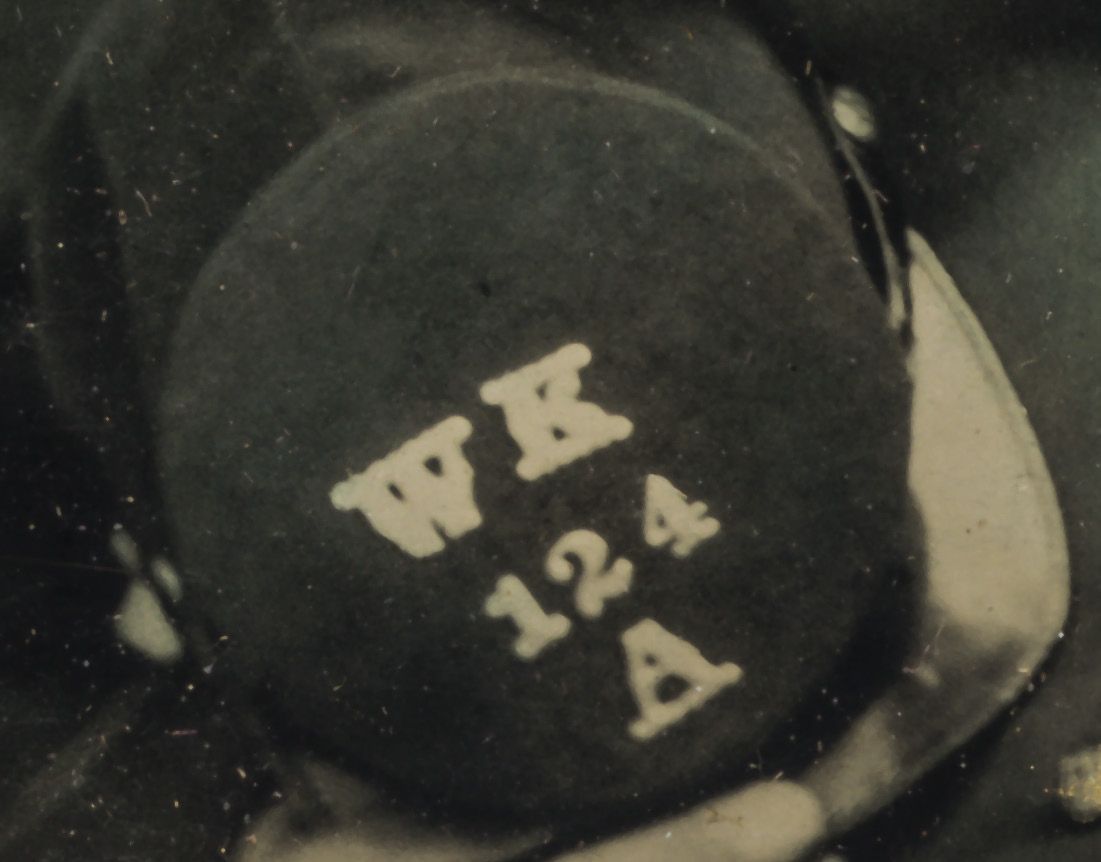
Figure 3. This Union soldier is brandishing a small frame revolver that appears to be a Marston 4th Type percussion pocket revolver, identifiable by the fluted cylinder and octagonal barrel. He is sporting a watch chain fastened to a jacket button with the watch tucked inside the jacket. His kepi is decorated with brass insignia denoting Company A, 124th Regiment. The “WK” may be an unknown local designation or the soldier’s initials. The following states had a 124th infantry regiment: Illinois, Indiana, New York, Ohio, and Pennsylvania, and there was a 124th U.S. Colored Troops (USCT) regiment from Kentucky.
Reversed image of the forage cap with “W K / 124 / A.”
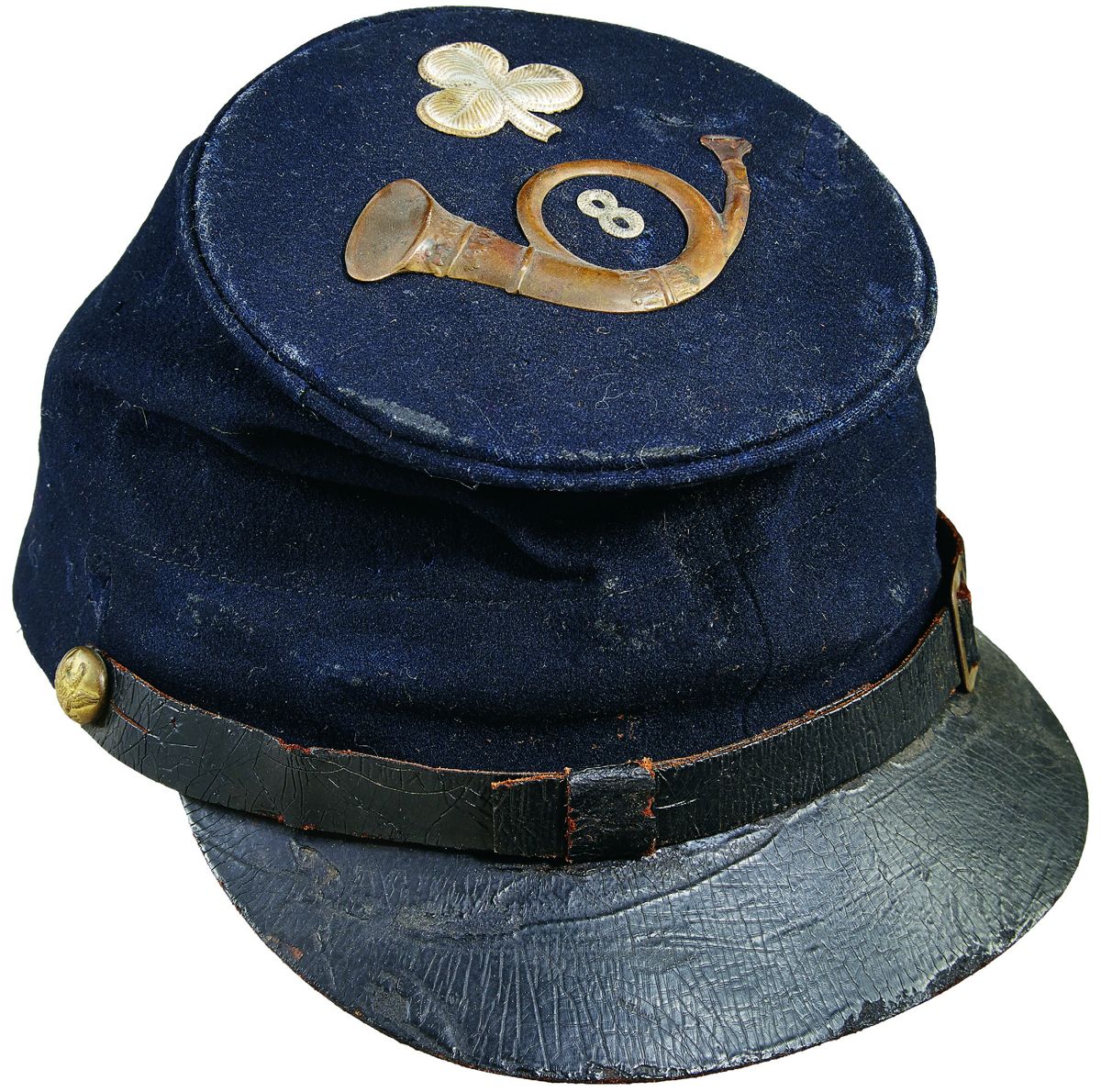
8TH OHIO VOLUNTEER INFANTRY FORAGE CAP WITH 2ND DIVISION II CORPS BADGE
This Union forage cap of deep blue wool has a few minor moth holes. The original brass infantry hunting horn insignia, 1/2-inch number “8,” and false embroidered silvered II Corps Badge are fastened to the cap with small pieces of wood and a leather tab. The leather chinstrap has a brass buckle, leather loop, and eagle side buttons. The leather sweatband measures 1 3/8-inches at the front and 1 3/4-inches at the back. All leather components exhibit typical crazing and minor wear. The brown polished cotton lining is in excellent condition with an intact paper label in crown that reads “Size No 2 6 7/8 U. S. Army L. J. & I. P.” As is typical, the cap bears the corps insignia of the last organization to which the regiment belonged: the Second Division of the II Corps. The regiment recruited in June 1861, and from June 1862, served in the II Corps, Army of the Potomac, fighting in all their major engagements including Antietam, where they fought at the Sunken Road, and Gettysburg, where they were heavily engaged repelling Pickett’s Charge on July 3. They also fought at Wilderness, Spotsylvania, and Petersburg before mustering out in June 1864, having lost eight officers and 124 enlisted men killed in action or mortally wounded. (Courtesy Cowans Auctions, Frasca Civil War Collection.)
crossed sabers, and artillery crossed cannon barrels. Occasionally, you might see crossed rifles on the crown of a kepi or forage cap, but these did not replace the infantry horn until the mid-1870s. The only Army insignia featuring a rifle or musket today are the Expert Infantryman’s Badge and the Combat Infantryman’s Badge, neither of which existed during the Civil War. In the Western Theater, hat hardware was less common as soldiers often favored civilian-style hats, which they felt imparted a more veteran appearance. Even when regulation hats were worn, they were frequently shaped to suit personal taste and were typically adorned with minimal trimmings or hardware, if period images are to be trusted. In the mid19th century, hats were symbols of status, manliness, and style. A careful study of period images reveals a wide array of headwear styles. Civilian men of the time were very particular about their headgear, and every soldier was once a civilian. Hats had a distinct shape and style that often reflected the personal preferences of the wearer. A review of over 400 period images of Western soldiers, where the hat could be clearly identified, showed that 83% wore some style of civilian hat, 7% wore plain kepis or forage caps, and the remaining 10% wore U.S. 1858
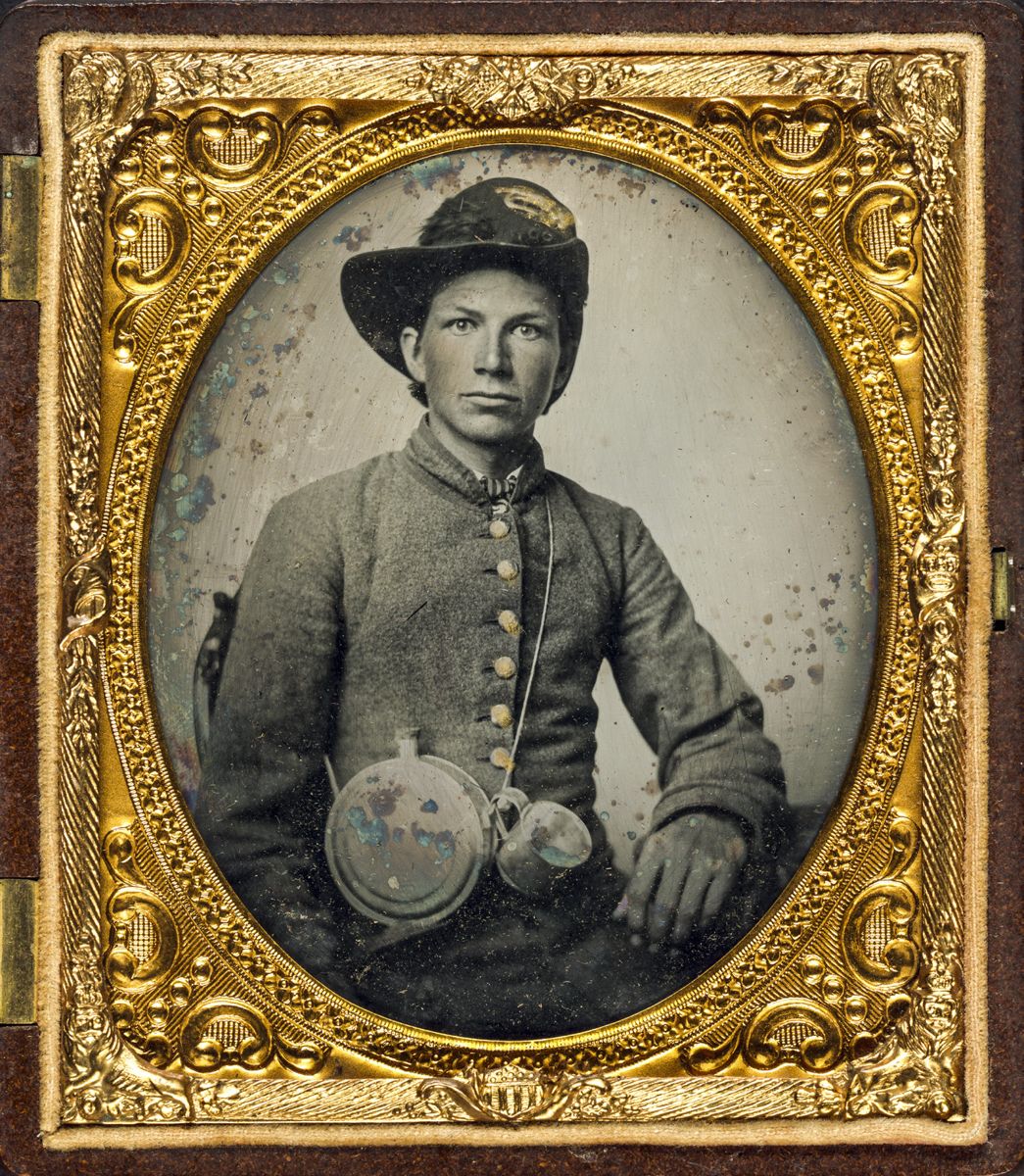
dress hats—only some of which featured regulation brass hardware. This data comes from a March 1991 article by Kurt Holman in Camp Chase Gazette titled “Insignia of the Common Union Soldier.” In other words, over 90% of Western soldiers did not wear any brass hat insignia at all. In the Eastern Theater, a study of Army of the Potomac images revealed that 64% of the soldiers wore plain hats, about 19% had insignia, and 17% displayed corps badges, according to Holman. Corps badges were initially worn by Army of the Potomac soldiers on the top of the forage cap (or kepi), the left side of the dress hat, or sometimes over the left breast. The corps badge concept is credited to Major General Phil Kearney, who once reprimanded officers who were not under his command. To prevent such mistakes in the future, Kearney ordered the men in his division to sew a two-inch square of red cloth on their hats to avoid confusion on the battlefield. When Major General Joseph Hooker took command of the Army of the Potomac, he adopted the idea so that any Union soldier could be identified from a distance on the battlefield. This simple act was said to improve morale, which was understandably low given the circumstances on the battlefields of Northern Virginia at the time. When General Ulysses S. Grant took command of the Army of the Potomac, he reorganized the army, leading to a change in the system. By then, there was a dizzying array of corps badges. This abundance of hat decorations presents a challenge for historical reenactments, as they limit the period and unit an impression can accurately represent. The Confederacy never implemented a badge system to identify their infantry units, although period images suggest that insignia were used. For instance, Figure 4 shows a Confederate soldier wearing a Jeff Davis hat with a mounted rifles insignia visible.
Figure 4. Unidentified young soldier in Confederate shell jacket, Hardee hat with Mounted Rifles insignia and plume with canteen and cup.
C raig L. B arry was born in Charlottesville, Va. He holds his BA and Masters degrees from UNC (Charlotte). Craig served The Watchdog Civil War Quarterly as Associate Editor and Editor from 2003–2017. The Watchdog published books and columns on 19 th - century material . H e is the author of several books including T he C ivil W ar M usket : A H andbook for H istorical A ccuracy (2006, 2011), T he U nfinished F ight : Essays on Confederate Material Culture Vol. I and II (2012, 2013). He has also published four books in the Suppliers to the Confederacy series on English Arms & Accoutrements, Quartermaster stores and other European imports.