
COLLECTION
Originally published April 2023 · pp. 10
This outstanding portrait taken January 16, 1863 by Fitchburg, Mass., photographer Joseph C. Moulton shows a determined and hardworking Sanitary Commission nurse Helen Louise Gilson (1836 –1868). After the Union defeat at Bull Run, Gilson left Boston and went to Virginia, to aid in treating the wounded and recovering the dead. She would continue to travel to all the major battlefields including Yorktown, Antietam, Chancellorsville, Fredericksburg and Gettysburg. At Petersburg in late 1864 over thirty black regiments were engaged, with heavy casualties. The wounded were taken to a temporary facility at City Point. A doctor would later state “It was in no sense a hospital, than a depot for wounded men.” Helen was appalled by the conditions and decided to do something about them. She campaigned for the establishment of a hospital for the black soldiers and the Colored
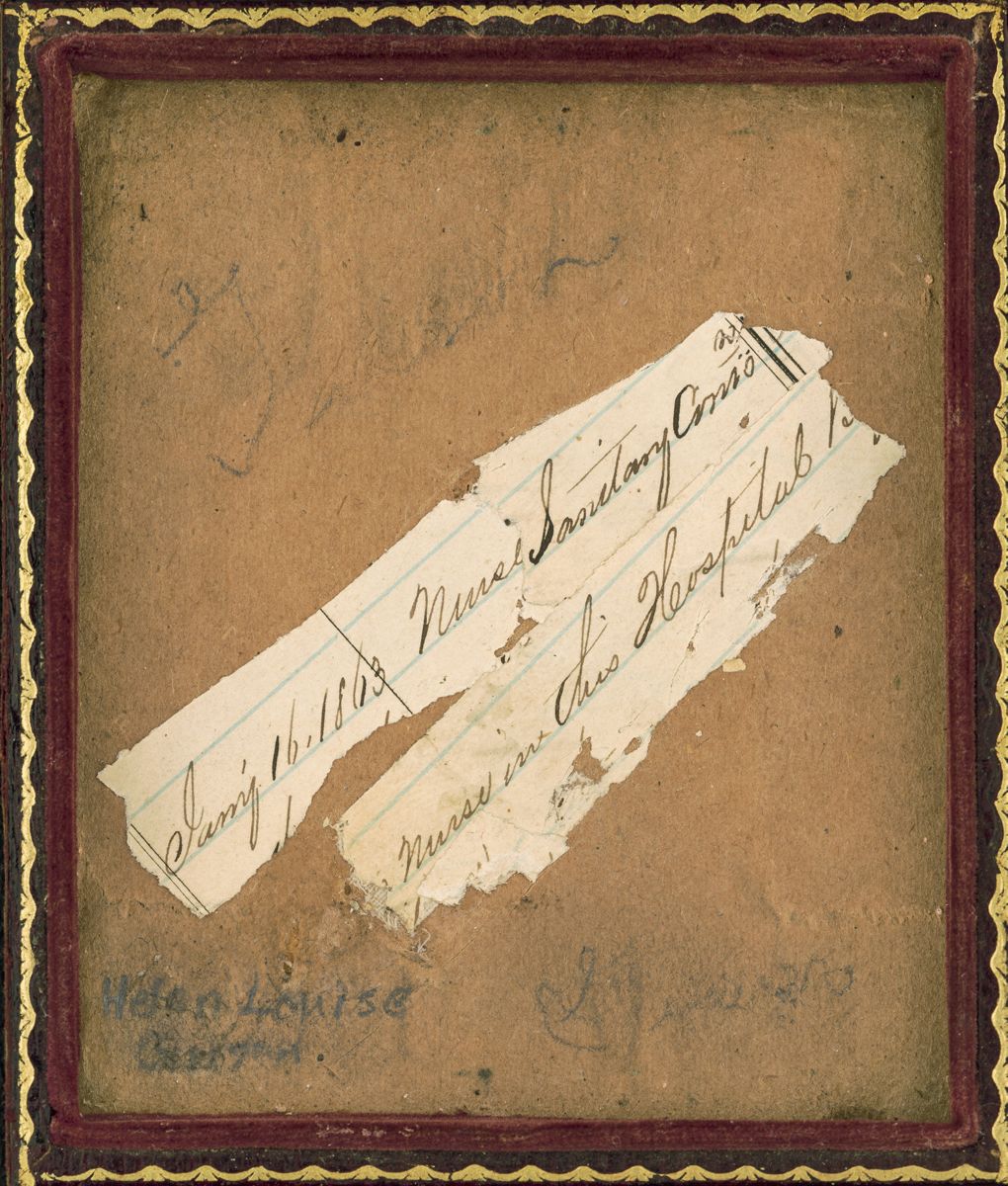
Hospital Service was organized. There were a square mile of tents and hundreds of wounded blacks being cared for at the facility. The Army detailed soldiers to assist Helen at her hospital working as cooks and nurses, as well as many civilian volunteers from the north. Gilson had contacted malaria, but she remained at her post until the fall of Richmond on April 2, 1865. On April 20, 1868 she died in childbirth at Newton Corner Hospital, too weak for childbirth due to never having fully recovered from the malaria she contacted at Petersburg. Her child did not survive either. “Angel of Light”: Helen L. Gilson, Army Nurse is the title of Kent State Civil War History article by Edward A. Miller Jr. in 1997 and among her best biographies. Text on second manuscript affixed inside case (below) behind photograph: “Jan’y 16, 1863, Nurse Sanitary Com., nurse in this Hospital.”
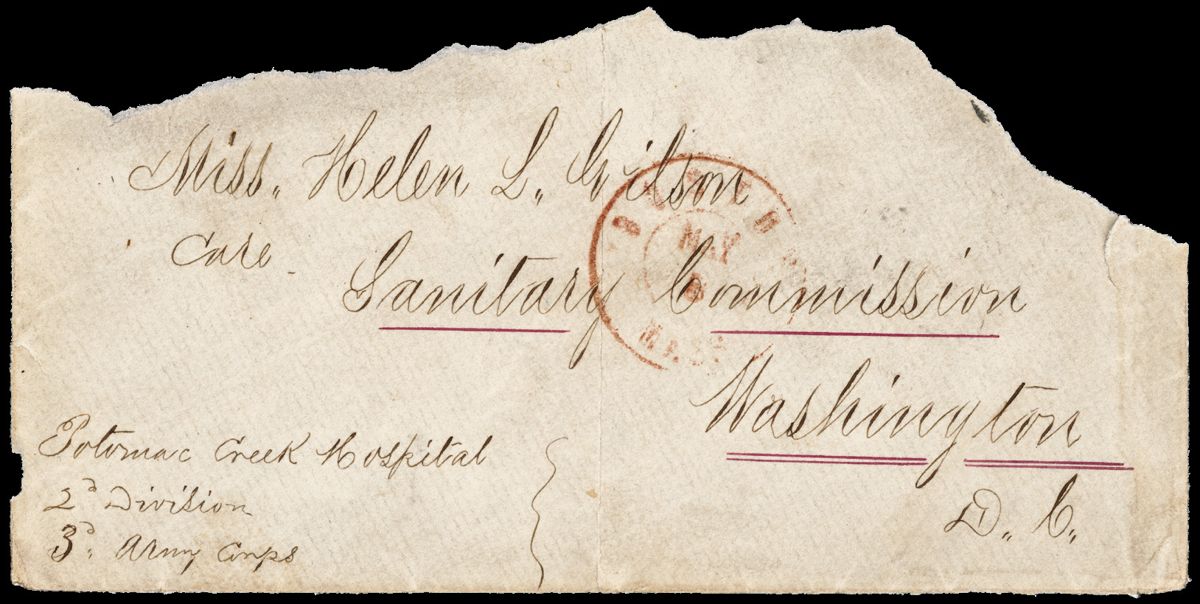
Helen Louise Gilson. Liljenquist Family Collection of Civil War Photographs (Library of Congress).
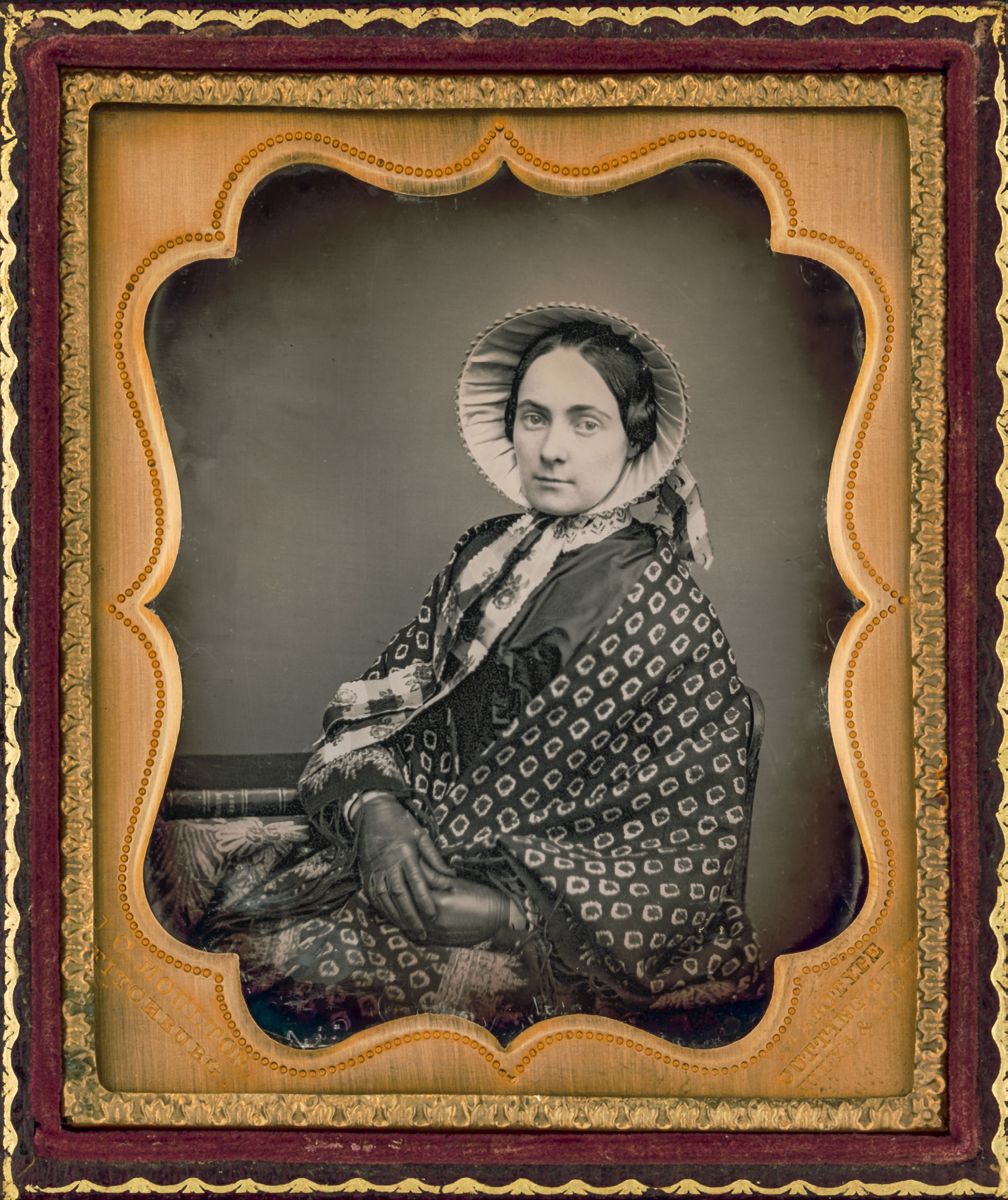
Text on manuscript fragment (torn envelope): “Miss Helen L. Gilson, care Sanitary Commission, Washington, D.C., Potomac Creek Hospital, 2d Division, 3d Army Corps.”